

To say that 2025 was a year of seismic changes to the world order is an understatement. It’s almost impossible to find any example of a year that did not involve a world war or catastrophic economic crisis seeing so much change in just 12 months. 100 years from now historians may very well write about 2025 as the critical hinge or pivot of the 21st century. Actions by the Trump administration caused shockwaves in global economics and security alliances at a speed that has been nothing short of disorienting.
Some of this directly impacted Moldova, but most of the year’s news was focused on stories and challenges closer to home. The war in Ukraine did not end in 24 hours and grinds on with continued uncertainty about its duration and ultimate outcome. Moldova’s September elections were easily the highest stakes political event in the country’s young history. Russia’s failure to dictate the outcome of this vote has secured Moldova’s European trajectory and the year ends with President Sandu and the PAS party ascendant. That said, the year was extremely challenging and the future remains uncertain.
Today we’re going to take a look at the major events of the year on a month by month journey through 2025. Writing this article left me shocked at just how much happened this year and how many unexpected twists and turns there were. I hope you enjoy this yearly roundup of 2025 - a year that upended geopolitics around the world and a year in which Moldova faced some of the greatest challenges in the young nation’s history.
Quick Note: All the links in this article are to past Moldova Matters articles from the year unless otherwise noted.
January - Energy Crisis
At 7 am on January 1st Ukraine stopped all transit of Russian natural gas through its territory. At that hour, Transnistria1 cut off central heat and hot water to all residential buildings in the region. All industrial enterprises except those making critical food products closed and furloughed their workforces. The MGRES power plant successfully switched over to coal reserves but rolling blackouts were immediately implemented to conserve power.
The cutoff of electricity supply from MGRES resulted in skyrocketing prices in Moldova, but no power outages.
The Transnistrian “authorities” hoped that limited rolling power outages would allow them 50 days of electricity with the coal reserves. This didn’t account for people rushing out to buy every space heater in the region (and many from Moldova) in the first days. By January 5th the grid was buckling with 4+ hour rolling blackouts and failing water supply systems.
As the situation deteriorated, a parallel information war was ongoing with the goal of assigning blame for what was happening. Chisinau blamed the Kremlin, who in turn blamed Chisinau and used their considerable propaganda and disinformation infrastructure to lead the charge. At the same time, it was far from clear what was actually going on at all. I weighed in on this on January 10th with an article unpacking various theories and explaining how the Kremlin was using a crisis of their own creation to pressure Moldova, Ukraine and Europe as a whole. I also explored why Moldova was so unprepared for this crisis - even though it was clearly foreseeable and people like me wrote about it as a looming challenge as early as January 10, 2024.
On January 15th, Transnistrian “leader” Vadim Krasnoselsky announced that he had just returned from a clandestine trip to Moscow and that the crisis would soon be over. All signs pointed to January 20th as the day that the gas would start flowing again. But twists and turns, lies and propaganda, continued and that day came and went with no conclusion to the crisis. By January 29th the residual gas in the pipelines was nearly spent. All month it had only been used for household cooking and for heating hospitals - but even at this low rate of usage, time eventually ran out. Then, Moldova announced 2 concrete moves to aid the region. First, they loaned Transnistria 3 billion cubes of natural gas in order to stabilize pressure in the gas lines. Second, the EU prepared a multi-stage bailout. First was a €30 million euro grant to cover energy consumption from February 1-10. Following that, they proposed a two-year aid package to support energy resilience in the whole country.
While it looked briefly like the crisis was at an end, things again took a turn with new announcements that the complicated plan for buying gas in exchange for electricity was not actually workable. January ended with the loan of gas staving off a total collapse of Transnistria’s energy system, but no resolution.
Also in January, the Trump Administration moved to freeze all foreign aid programs in line with a day one executive order. Initially, this was thought to mean a freeze on all new programs, but word shortly arrived that all employees of all USAID funded projects were to put down their pens and stop work immediately. The DOGE era had begun.
On a personal note, in late January I became the target of a Kremlin smear campaign. My December 2024 investigation into Vasile Tarlev’s US lobbying efforts drew the attention of some pro-Kremlin actors who wrote lots of bad things about me on websites that turned out to not have many readers. I responded to this with a piece at the time.
January - Outside the News:
In case you missed it, here are some other fun stories from the month:

February - The USAID “Chainsaw”
February began with a resolution of the energy crisis. Moldova’s gas loan and promises of continued EU support, allowed electricity generation to resume. By February 3rd consumers had hot water and heat, schools were being reheated and planning to return to class and rolling power outages stopped. The region began the process of repairing a lot of burst pipes, and Transnistria’s leaders thanked both the Moldovan government and EU for the support.
Initially, this created a series of “firsts” in the Moldova-Transnistria relationship. Transnistria agreed to discussions on human rights in the region and allowed the broadcasting of Moldova’s state news channel for the first time. Inspections of industrial sites were carried out and it seemed that EU aid would lead towards more progress in the relationship. This ultimately didn’t happen, as Russia started a new and convoluted scheme for supplying the region with gas via various shell companies. I wrote at the time how the bluffs, leverage and unanswered questions of the crisis meant that the immediate problems had passed, but not been resolved.
In parallel, Mayor Ion Ceban announced the creation of the “Alternative” Bloc which brought together a group of pro-Russian politicians that appeared to be less than the sum of its parts (and was).
Also, the freeze of US foreign aid turned into a “chainsaw” and Moldova’s pro-Kremlin politicians had a field day. As Elon & DOGE live-X’ed their destruction of the Federal government, Kremlin proxies spread ever more insane fever dream conspiracy theories. With USAID being called a “criminal organization” by US politicians, Igor Dodon and others started claiming that all those funded by USAID projects in Moldova (independent media, NGOs, industry associations, etc) were themselves criminals.
Also in February, Romanian President Klaus Iohannis announced his resignation. It was the first time a Romanian president had ever resigned and it signaled an ever deepening political crisis in the country.
Weeks Where Decades Happen
At the Munich Security Conference, Vice President JD Vance shocked America’s NATO allies by clearly stating that they are a bigger threat than Russia is. As Moldova reeled from the destruction of USAID, Donald Trump called out Moldova by name in a speech to Congress. This started yet another round of gleeful attacks on “Soros structures and USAID” from pro-Kremlin talking heads.
I wrote my most controversial article of the year (as judged by the number of unsubscriptions it generated) to try and break this all down. Reading it from today’s vantage point I think it holds up well.

As the 3rd anniversary of the full scale invasion passed, Moldova was in a precarious political situation. USAID was gone and the US-Moldova relationship was unclear (at best). Romania was in the throws of a full scale political crisis with hard-right forces that are hostile to Moldova, Ukraine and the EU ascendant.
In the midst of all this fun, Moldova Matters turned 4.
March - MEGA and Ilan Shor
In March Moldova Matters published a series of original investigations targeting Ilan Shor’s new lobbying efforts and agents of influence in Washington DC. In this series (Part 1, Part 2), jointly investigated and written by myself and Emma Marechal, we look at how Shor politician Victoria Şapa launched lobbying efforts in Washington DC with the support of Spanish PR / Lobbying firm Fortius Consulting.
This series highlighted the growing links between the Shor network and MAGA / MEGA (Make Europe Great Again). It also showed how the lack of transparency and lobbying regulations in the EU allowed this clandestine activity to fly under the radar of most investigative journalists. The series also coincided with the total breakdown of American transparency regulations as the Trump administration announced that they would no longer be enforcing the Foreign Agents Registration Act (FARA). That doesn’t mean that it’s no longer law, and many firms continued to comply with the law as we saw in later 2025 investigations. Fortius did not, marking one of many criminal acts in the United States that has gone unaddressed in the past year.
The investigation also showed how Victoria Şapa lied on her asset declaration forms when running for office in Moldova - a crime that has also not been investigated to date2.
The biggest news of March, globally and in Moldova, was the shocking Zelenskyy - Trump - Vance press conference in the Oval Office. An exchange that built on the shock and fear of the Munich speech and resulted in the EU’s top diplomat Kaja Kallas to state:
“Today, it became clear that the free world needs a new leader. It’s up to us, Europeans, to take this challenge.”
EU leaders Antonio Costa and Emmanuel Macron rushed to shore up support for Moldova following these events with high profile visits and speeches. This pattern of Europe rallying to support Moldova in this critical year carried on through and after the September elections.
March was also an interesting month in terms of Moldova’s justice system. UK law enforcement arrested Veaceslav Platon, though his fight against extradition is now dragging into 2026. Shor MPs Alexandr Nesterovschi and Irina Lozovan were both convicted and sentenced in cases of corruption and illicit party financing - but they were gone before the sentence was read out. Both fugitives are assumed to be hiding in Transnistria to this day.
This latest failure of the Moldovan justice system resulted in real changes. In late March Bashkan Gutsul was detained at the airport while attempting to leave the country. The Moldovan authorities seemed determined not to be made fools of again.
March - Outside the News:
In case you missed it, here are some other fun stories from the month:

April - “Liberation Day”
Happy “liberation day” to all those who celebrate. April began with the head spinning announcement that the United States was starting a global trade war.
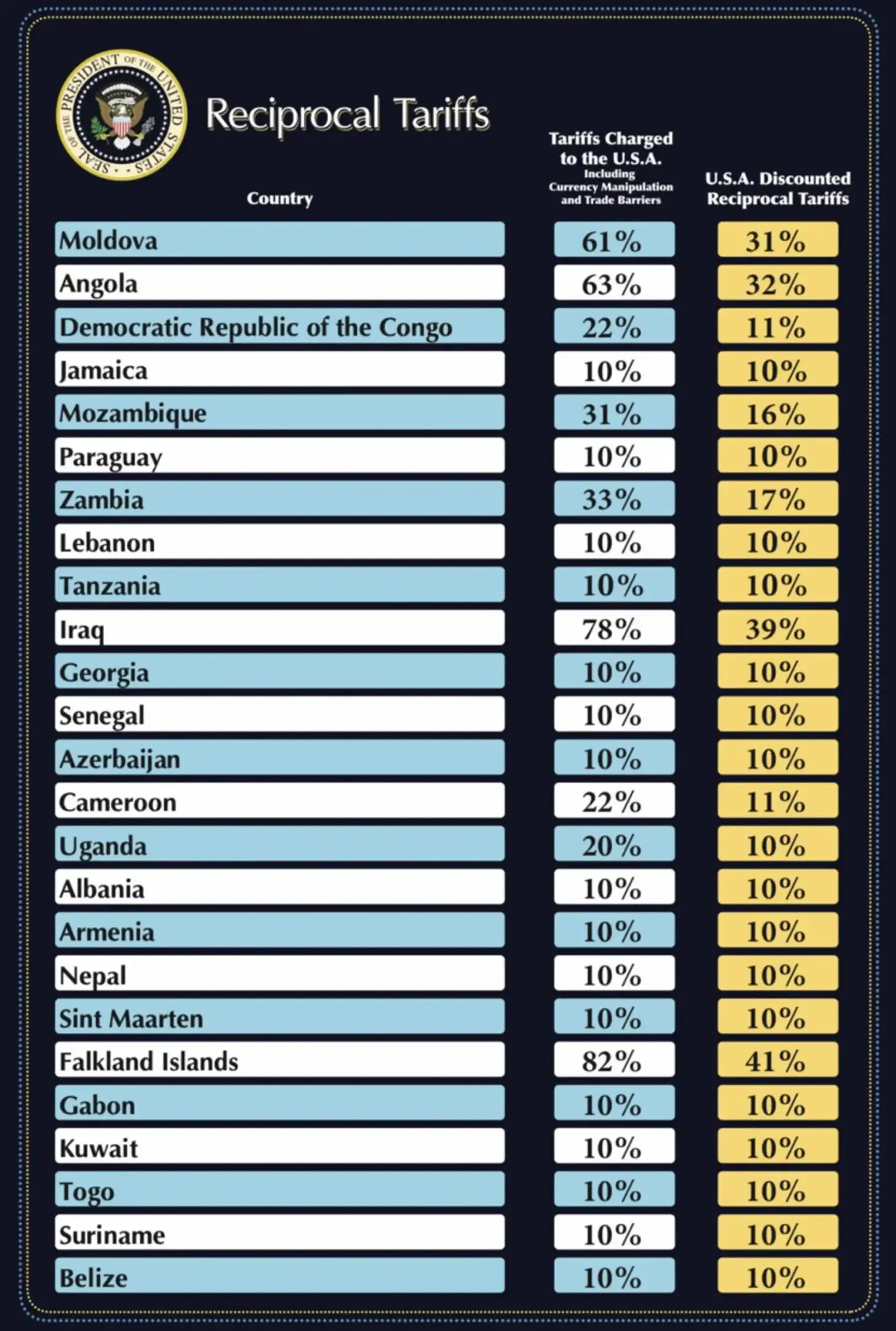
At the time, I was one of the first in Moldova to cover the bad math and blatant lies underpinning the announcements of the “discounted reciprocal tariffs.” I later found out that this was probably one of my most read articles ever… but not as I would have liked it. Former President of the Constitutional Court Alexandru Tănase plagiarized my article and released it in multiple news outlets as his opinion. I didn’t have that on my 2025 bingo card.
My post on Linkedin about that same article unexpectedly went super viral with more than 24,000 impressions and 240+ comments. I detailed the unspooling madness of this comment thread (“why don’t you move to Moldova if you like it so much!??!” etc) in an article for my other substack.
Later on we published a dive into the trade numbers between Moldova and the US that clearly showed the sloppy and economically illiterate basis for these tariffs.
Meanwhile, the shifting sands of the global order were becoming truly worrying in Moldova. Romania’s far-right “sovereigntist” parties were clearly aligning themselves with the new Trump Administration (and Russia). In a moment of real peril I wrote about Moldova’s new regional security situation:

Mayor Ceban followed this new trend of trying to associate with MAGA when he appeared alongside Donald Trump Jr. at a conference and posted “Make Moldova Great Again.” Late April also saw the announcement that Moldova will go to the polls on September 28th for parliamentary elections.
April was also a big month for news in the justice sector. Following her detention at the airport on March 25th, Bashkan Gutsul was arrested. At the time, myself and others wrote about how the arrested, released to house arrest, release to judicial control, just plain released - cycle was likely to continue. I was wrong. Bashkan Gutsul remained in jail through the end of her trial, after which she moved to Prison 13 to serve her 7 year sentence. That little sprint to the airport was her last move as a free woman.
Moldova’s Security and Intelligence Service (SIS) announced that fugitive MP Alexandr Nesterovschi escaped justice to Transnistria in the back of a Russian embassy car. They detailed how a coordinated and complex Russian operation allowed the Shor network MP to escape right ahead of his prison sentence.
Also in April the country became aware of Vito Perez Gonzalez - aka “El Plaho.” Interpol had announced that Plahotniuc was using a Mexican passport as one of his fake identities leading to much fun on social media.
Finally, the country was rocked by a major scandal where an amnesty law was used (abused?) to let multiple extremely dangerous criminals out of jail. The details are extremely complicated, but ultimately PAS MP Olesea Stamate, the author of the bill took the fall. She was expelled from the PAS party and a recent glance at her facebook page suggests that she continues to take this with humor and dignity.
April - Outside the News:
In case you missed it, here are some other fun stories from the month:

May - Maia Sandu Abandons the Tightrope
The month of May was all about the Romanian elections. Romania has long been one of Moldova’s most stalwart supporters inside the EU and a major bilateral partner. Not to mention the bonds of common language and history, and the fact that a HUGE number of Moldovans are dual citizens. So things were tense in the buildup to Romania’s May 4th first round of the do-over presidential elections.
Călin Georgescu was barred from running, leaving George Simion as the standard bearer for the far right. He rebranded himself as a “sovereigntist” and sought to stress his alignment with Donald Trump and the MAGA movement - at one point appearing on Steve Bannon’s podcast. Simion is the founder of the MEGA movement and has been banned from both Moldova and Ukraine for advocating annexing all of Moldova and parts of Ukraine.
When Simion won the first round of elections in a landslide, people started getting quite nervous. 91,000 Moldovans3 turned out in the election and overwhelmingly supported centrist Bucharest Mayor Nicuşor Dan. Only 12% voted for Simion. Nicuşor Dan took second place overall by an extremely narrow margin - Moldovan votes clearly put him over the top.
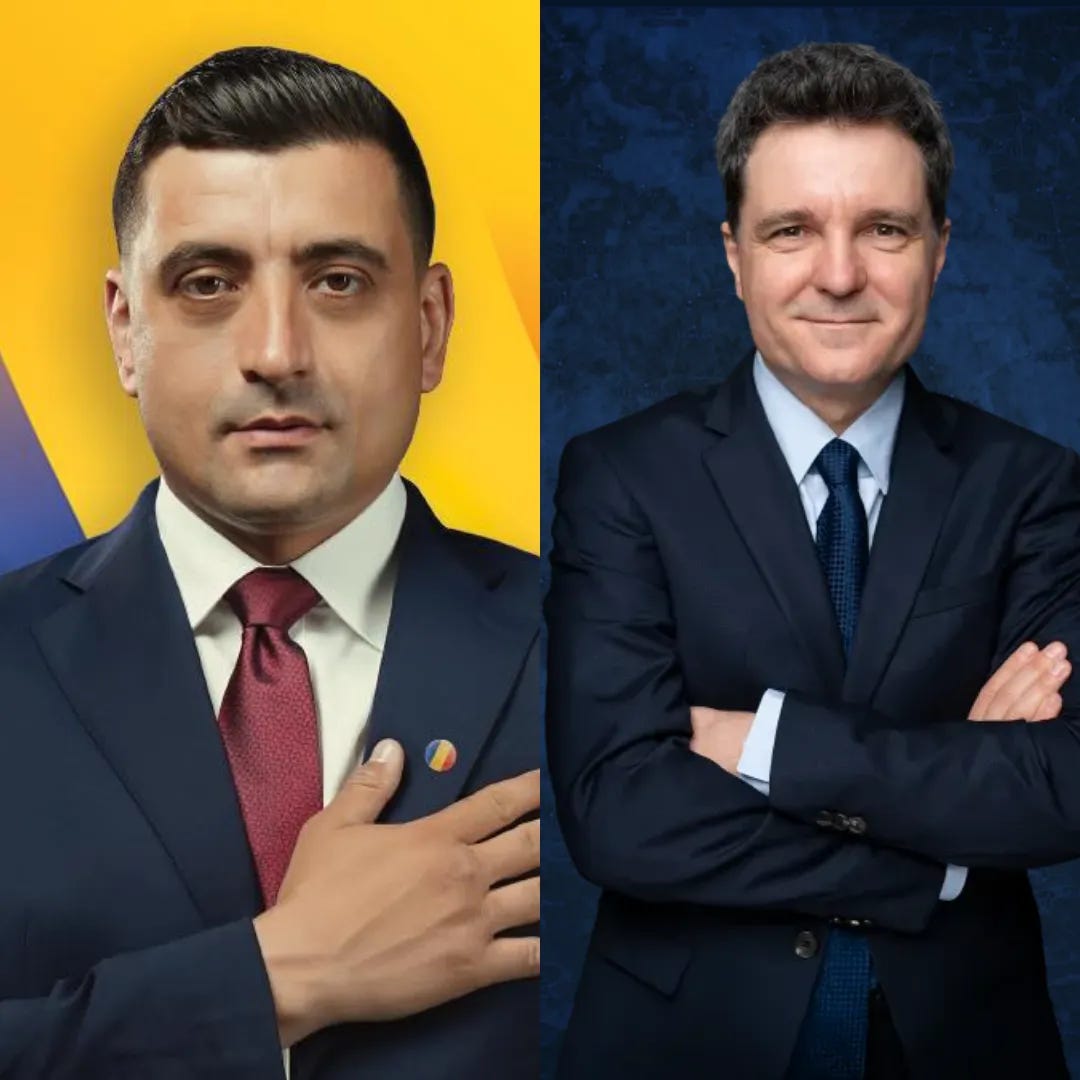
The vote caused political crisis in Romania as the government collapsed. Polls showed Simion winning the second round by 10 points or more. Fear of a Simion victory caused a run on the banks.
In 2022 Politico called Maia Sandu “the Tightrope Walker,” implying that she had to carefully balance in a position between larger outside powers. In May 2025 Maia Sandu abandoned the tightrope and forcefully came out in support of Nicuşor Dan. As a dual citizen, she had every right to speak about the election outcome, but as a President, she courted enormous risk if Simion won.
In the 48 hours before the election George Simion launched a massive online “stop the steal” campaign. He alleged that the Moldovan government was somehow rigging Romania’s elections. He ran a Romanian language social media campaign, but also called-in to MAGA podcasts and media shows by Steve Bannon and Jack Posobiec to accuse Maia Sandu and the “globalists” of rigging the election. In an unusual final campaign push, Simion traveled around Europe getting endorsements from far-right figures such as France’s Marine Le Pen, Italy’s Giorgia Meloni, MAGA US Congressman Andy Ogles and a host of lesser known people including Russian fascist Aleksandr Dugin.
On May 18th Romanians went to the polls and elected Nicuşor Dan in a major upset. Moldovan-Romanian turnout surged from 90,000 in the first round to 158,000 in the second, with 88% of votes going to Nicuşor Dan. High turnout drowned out the “stop the steal” campaign and massive crowds filled the streets of Romanian cities waving EU flags. Simion initially declared victory, but even he conceded as the numbers rolled in. Crowds in the streets chanted “Russia, don't forget, Romania is not yours!”
Within Moldova, the narratives of election fraud were spread primarily by Shor network candidate Victoria Furtună and Democracy at Home Party (PPDA) leader Vasile Costiuc. They spread claims of voter fraud “at the behest of criminal networks, USAID and Soros.”
May - Outside the News:
In case you missed it, here are some other fun stories from the month:


June - All Eyes Turn to Moldova
In early June, President Maia Sandu traveled to Odesa Ukraine to attend a regional summit. There, she attended a trilateral meeting with President Zelensky and President Dan.
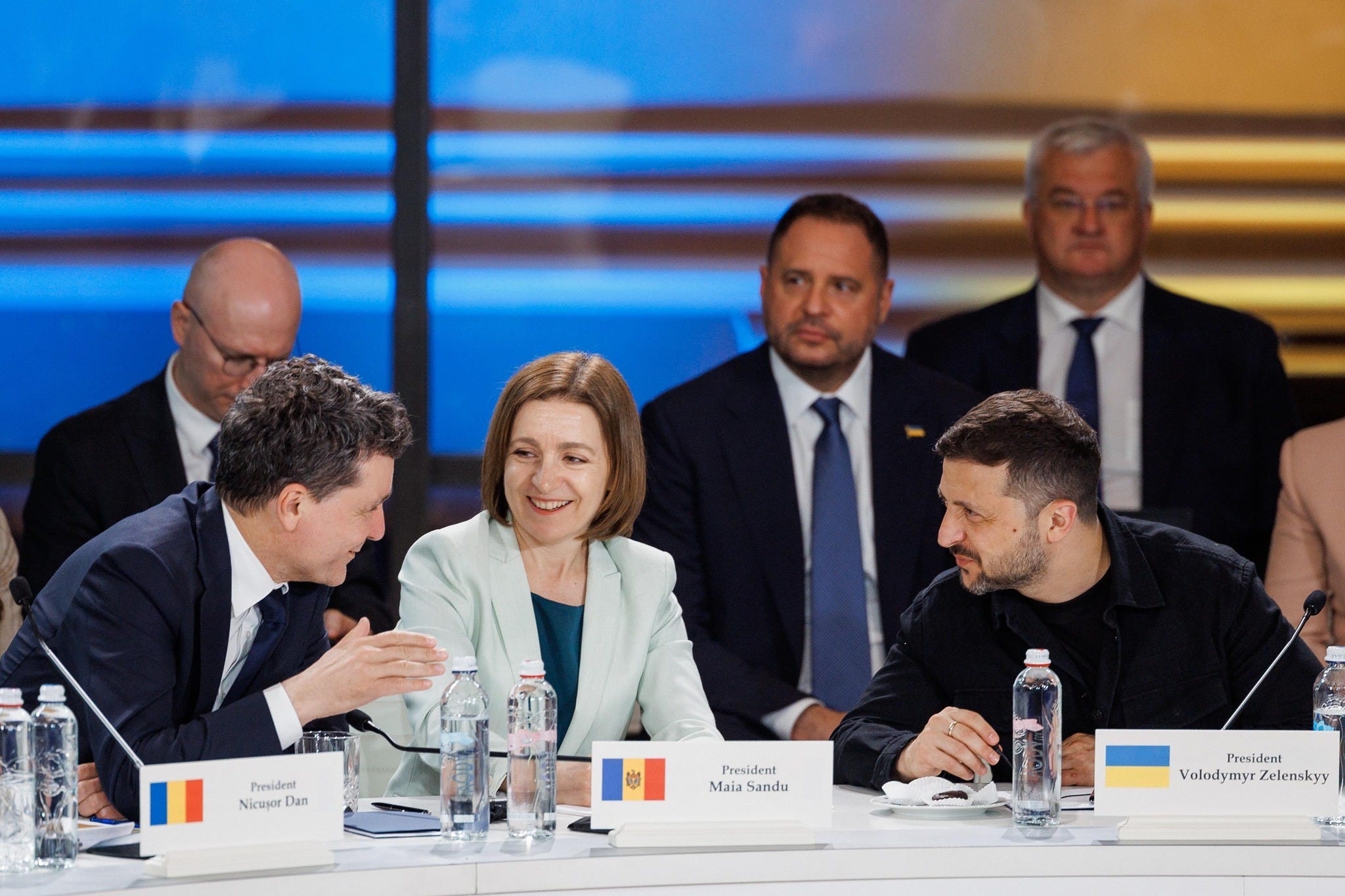
Their meeting underscored the fact that Moldova’s regional security situation had substantially improved with the outcome of the Romanian elections. The next threat to the region’s security would be from the upcoming Moldovan elections.
Prime Minister Recean began speaking of the high stakes of the coming election by stating that Moldova had intelligence that Russia intended to deploy 10,000 soldiers to Transnistria. He and other government figures explained that if a pro-Russian government came to power soldiers could be infiltrated via commercial flights in civilian clothes. Once they crossed into Transnistria there would be more than enough equipment for them there.
President Sandu also spoke of the high stakes at a forceful speech in Munich in late June. She called on Europe to wake up to Russia’s hybrid threats and reiterated the need for support in securing democratic elections.
Amidst growing ties between the Shor network and Romania’s far right, hybrid attacks against the Moldovan election began to gain steam. By the end of June Moldova Matters reported on Shor’s new crypto currency, A7A5, and the huge financial infrastructure being stood up to interfere in Moldova.
Finally, Moldovan politicians Igor Dodon (Socialist), Irina Vlah (Heart of Moldova), Vasile Tarlev (Future of Moldova) and Diana Caraman (Communist) all traveled to the Saint Petersburg International Economic Forum. Officially, they were there to “negotiate” with Russia on energy prices. In reality, we saw the first sign of the forming of the Patriotic Bloc for the election. Once again 4 pro-Kremlin parties had come together in a formation that was substantially less than the sum of its parts.
That’s it for part 1 of the 2025 Year in Review. Stay tuned for part 2!
Note: As we’ve done before with articles about Transnistria we will sometimes say “Moldova” and “Transnistria” as a way to indicate the parts of Moldovan territory controlled by Chisinau and Tiraspol respectively. This is easier for most readers than “left bank” vs “right bank” and is simply a convienent shorthand. All territory in question is Moldova.
The statute of limitations runs out in September 2026
This counts only Moldovan-Romanian dual citizens residing in Moldova. Many more voted in Romania or at polling places around the diaspora.
As a British PM once said, "A week is a long time in politics".