

Reflections after a week of meetings in the U.S. capital.
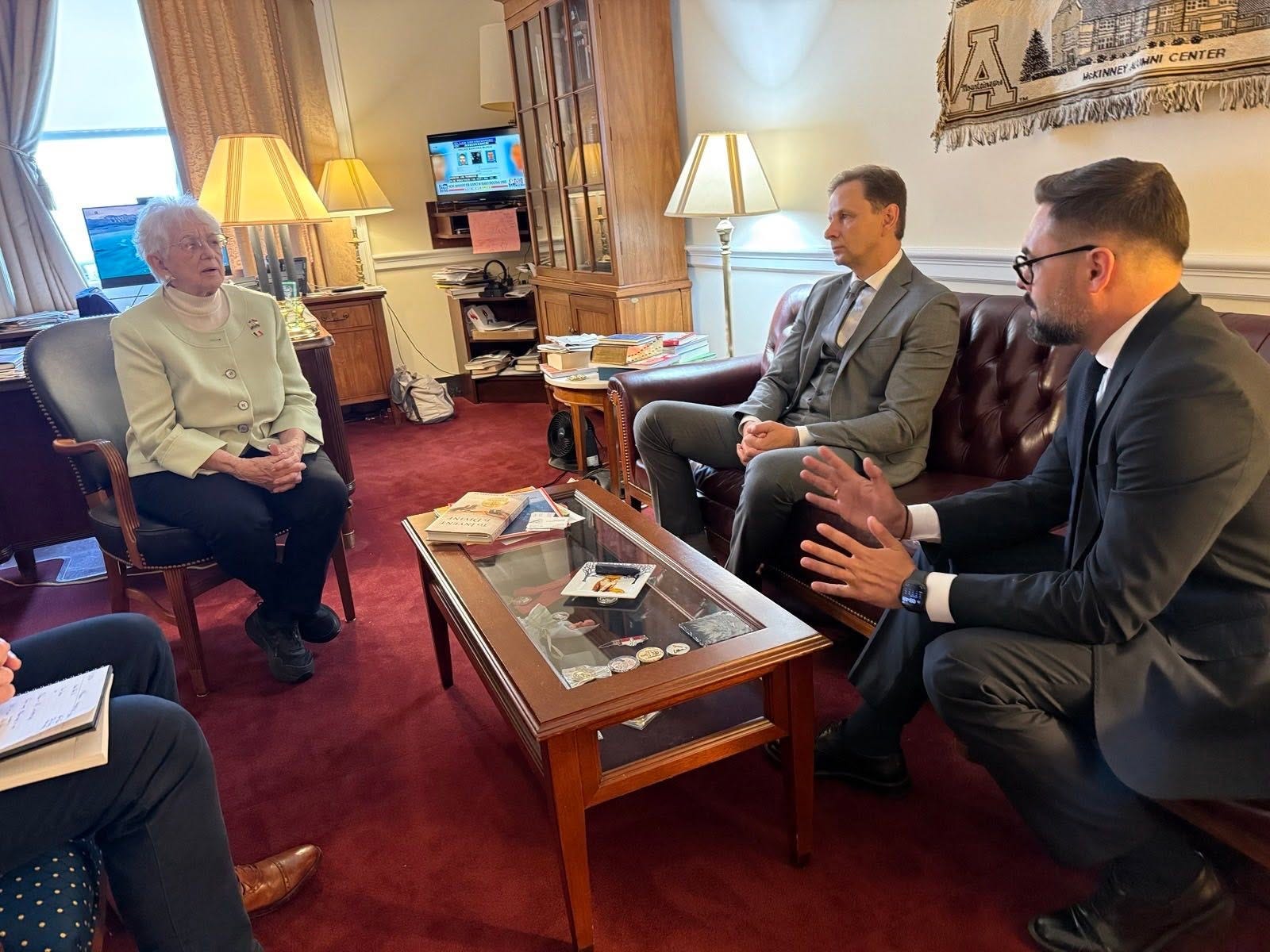
For most of three decades, Moldova entered Western conversations as a problem to be managed: small, poor, divided, with a breakaway region and a Russian garrison. That Moldova is gone. The country that opened the first cluster of its EU accession negotiations this June, that twice in two years beat back the most aggressive election interference in its history and that broke its dependence on Russian gas, is something else. Moldova is a partner. I spent a week in late June making exactly that argument in Washington, at the State Department, on Capitol Hill, at the Stimson Center, The Atlantic Council and The World Justice Project. The visit fell on the 36th anniversary of Moldova’s Declaration of Sovereignty, a useful reminder that sovereignty in our neighbourhood is not a date in a textbook but a choice re-made under pressure. The encouraging news is that the argument is landing.
What matters about Moldova’s turn West is not only its direction but the manner of it. Moldovans chose continuity in 2024 and 2025 while Russia spent more than $100 million to buy votes, fund proxies and flood the information space, and they chose it with Russian troops still illegally stationed on national territory and a war next door. A choice made under duress is sturdier than one made in comfort. For Washington, the implication is liberating. Moldova is not contested ground that demands careful neutrality. It is an aligned country, where the democratic preference of Moldovans and the strategic interest of the United States point the same way.
The argument lands because the partnership has a record, not a wish list. It is not charity. It is a security partnership with shared burdens. In April 2024 Moldova imported American liquefied natural gas for the first time, removing the single most powerful lever Moscow had held over Chișinău for a generation. It ran two national elections under hybrid assault without the public losing confidence in the result. It dismantled key parts of the financial machinery of Russian influence. None of it was free, but all of it was cheap against the alternative, and the support behind it has stayed bipartisan, reaffirmed in Congressional resolutions backed by both parties on the Hill.
The case for staying engaged is, at heart, about what Moldova contributes rather than consumes. Moldova is an emerging security provider, not just a security consumer. A stable, Western-anchored Moldova denies Russia a second front on Ukraine’s flank, a land bridge toward Odesa and the Black Sea and a propaganda victory that a nation can be dragged back once it has chosen the West. Modest, targeted cooperation buys down a far larger and costlier risk. This is the plain logic of peace through strength: stability is held by raising the cost of aggression, not by conceding to it. By that measure Moldova is among the cheapest deterrence investments available to the United States today. The contest, after all, is no longer mainly about tanks. It is hybrid, and the front line runs through citizens’ phones and electricity bills.
No file is more misunderstood abroad than Transnistria. It is too often read as a frozen conflict awaiting some grand external mediation. That framing is comfortable and wrong: it casts Moldova as a problem for others to solve and quietly hands Moscow a veto over our future. The reality is that Moldova owns this process and manages it peacefully, lawfully and on its own terms. What Moldova asks of its partners is not mediation but backing its agency, its reintegration efforts and sustaining the international pressure that holds Russia to its own commitments. Moscow committed at the 1999 OSCE Istanbul Summit to withdraw its forces and munitions from Moldova and has ignored that promise for more than two decades. Until it complies, the shared task should be to keep making the illegal presence steadily irrelevant and costly, while preserving peace, development and protecting ordinary people on both banks.
This is also why the way the war in Ukraine ends matters so much to us. No country in Europe wants a just and lasting peace more than Moldova. But peace on the wrong terms could raise our risk rather than lower it, by freeing Russian capacity and reviving old ambitions along the Black Sea coast. The same resolve that has kept this war from spreading must carry through any settlement. Small states are not spectators to great-power bargains. We are usually the first place their consequences are felt. Moldova should therefore be a stakeholder in Europe’s security architecture, not a footnote to it.
There is a wider lesson in Moldova’s experience that Washington and Brussels would do well to study. A small democracy with limited means has shown that Russian hybrid interference can be beaten rather than merely endured, when investment in resilience comes early and elections are defended deliberately. What worked here, hardened cyber defences, stronger financial intelligence and a public increasingly inoculated against disinformation, is exportable to other front-line democracies. Moldova is not only a place to defend. It is a place to learn from.
Energy ties the whole argument together. Every cargo of American LNG that reaches Moldova is two things at once: a gain for our security and a market for U.S. energy. Pair the bipartisan POWER Moldova Act with grid interconnection through Romania and new generation at home, and the lever Russia has used most often simply stops working. With a 750-mile border with Ukraine, a secure, EU-integrated Moldova is also a natural platform from which American firms can help rebuild it.
I left Washington with more friends and a clearer sense of what comes next. The task is not to persuade anyone that Moldova deserves sympathy. It is to build on an alignment that already exists. A Moldova that completes its reforms, joins the European Union by the end of this decade and helps anchor stability in the Black Sea region is a lasting asset for the United States and Europe alike. A reliable partner, a growing market and a contributor to the security of a neighbourhood that has known too little of it. That is the partnership we came to advance and one I am now confident we can deliver together.
Iulian Groza is Executive Director of the Institute for European Policies and Reforms (IPRE), an independent think-tank in Chișinău. He is a former Deputy Foreign Minister of the Republic of Moldova, responsible for European integration and international law. His work focuses on EU accession, foreign and security policy, the rule of law and democratic resilience.

I really enjoyed your accounting of what is happening with Transnistria. I served in the Peace Corps in Moldova 2015-2017. A time of beginning changes. Following much of it. But your synopsis is written in a way that makes all I've seen - and often misunderstood - start to make sense. I am rooting for the EU for Moldova and am so very proud of the monumental changes that have occurred and the path it is leading this wonderful country. Please keep us updated as thing move along. I suspect it will all be faster than we anticipate.
I enjoyed reading your piece.
Is it the most preferable option for Moldova to "solve" the Transnistria issue on its own with soft EU and American support, without the two latter parties taking a serious stake in the issue?