
Prime Minister Tofan Gets to Work
Following his swearing in on July 22, Prime Minister Vasile Tofan held his first cabinet meeting where he told the ministers to “tighten their belts.” He took particular aim at official travel, noting that “travel budgets are quite large” and stating that some of it is touristic in nature. He stated:
“I learned today that the Prime Minister approves all visits outside the country. (…) I want to tell you that I will be much more demanding in approving these visits,”
In the meeting he addressed public concerns about “unspeakable” public sector salaries. He stated that a new wage law is needed (and coming) that will codify salary rates as well as practices around bonuses. But that in the meantime, all ministers were instructed to “bring order” to the agencies and organizations in their portfolios.
Speaking about the tax reform, Tofan stated that “The first attempt to bring the tax reform to fruition was not successful, to put it delicately. In fact, it was a failure.” But he emphasized the need for a major reform of the tax system and directed the Ministry of Finance to publish a draft by August 6th. He told the assembled ministers that he would be involved in the process and personally responsible for this reform.
This drew a stark contrast with his predecessor who put out his first statement on the tax reform more than 2 weeks after he stepped down. In it he praised the professionalism of the reform, noted that it was approved by the IMF, compared critics to “amateur league” football players and generally punched back at critics1.
Prime Minister Tofan has also announcement members of his team, with former Minister of Finance Andrian Gavrilită returning to government as his chief economic advisor. Carolina Bogatiuc will be his chief of staff and journalist Dumitru Ciorici will be his press secretary.
Radu Musteața’s Turbulent 3 Days in Office
An early challenge for the Tofan government came when Journal TV published a picture of the brand new Minister of Agriculture, Radu Musteața, allegedly showing him at a Democratic Party (PDM) meeting. The story reported that the photo in question showed Musteața receiving his PDM membership card from PDM MP Nae Simion Pleșca. Allegedly, this occurred sometime in 2017.


This story mattered because it alleged that Musteața had joined Vladimir Plahotniuc’s PDM at the height of the oligarch’s state capture.
Minister Musteața adamantly denied this writing on facebook that “I have never led any territorial organization of a political party and I have not been a member of the Democratic Party.” He went on to repeat categorical denials in multiple statements and on TV interviews.
Prime Minister Tofan indicated that he believed Musteață and that lacking clear evidence contradicting his statements, “Radu Musteață has my full support.” This evidence soon began piling up with PDM’s successor party, PSDE stating that their records show that was a PDM member and had a party leadership position in Ciocana.
After 3 days as Minister of Agriculture, Radu Musteață resigned from his position claiming that he did so to protect the team and maintain trust, asking that the action “not be tarnished and eroded by false and manipulative information.” Effectively, he resigned while still denying the accusations.
Asked to comment, Speaker Igor Grosu stated that he believed Musteață when he said he was not a PDM party member and expressed regret that he resigned. The same day PSDE produced a copy of his signed application for membership and Musteață finally admitted that he lied. He continued to downplay his interactions with PDM as “insignificant” but admitted that he regretted that he “did not have the courage to tell the whole truth.”
This marks one of the shortest tenures of any minister in Moldovan history2 and a bumpy start for the new government. No announcement of a new candidate for Minister of Agriculture has been made to date.
Politics & News
Here’s a roundup of the other top politics stories of the week:
Anti-corruption police (CNA) detain 3 in relation to MoldATSA scandal. At the same time the CNA conducted 25 searches in relation to alleged criminal decision making at the company - including violate public procurement, fake hiring competitions, unjustified salaries and bonuses and more. CNA noted that MoldATSA spent 9 million lei on staff trainings in the first 5 months of 2025 alone including 106,000 lei spent on sending a staffer to the UK for a beginner English course. Arrests targeted decision makers including the company’s Chief Accountant. Two of the 3 arrested are confined for 30 days detention while one is on house arrest.
The government approved the “Restart in Education” reform aimed at centralizing school administration. Under the proposed law, all schools above the level of kindergarten will be subordinated directly to the Ministry of Education via newly established Territorial Education Agencies. Currently, schools are administered locally by district and municipal councils. Minister of Education Dan Perciun explained the reform as necessary for uniform standards and conditions throughout the country.
The Model Schools network is expanding. Parliament approved an investment of €50 million euros to remodel 20 more schools in the regions. Of the investment, €40 million will come from the European Investment Bank (EIB) as a loan. This investment will bring the total number of schools in the program up to 90 and when renovations are complete will see 1 in 4 children in Moldova enrolled in a Model School.
The government approved an anti-SLAPP law. The proposed law would create new protections against SLAPP lawsuits,3 allowing judges to rapidly throw out obviously unfounded claims, sanction those committing abuses by filing these suits and create protections for defendants of SLAPP suits to more easily recoup their legal costs. This law is designed to protect journalists and civil society activists and brings Moldovan legislation into line with EU directives.
The government approved a legal framework for cryptocurrencies. It delegates supervision of the digital currencies and assets markets to the National Bank (NBM) and National Financial Market Commission. The framework envisions separate regulations for fiat-backed stablecoins, coins backed by other assets and “other” crypto currencies. Currently Moldova has no regulatory framework for cryptocurrencies effectively making them illegal in the country.
30 day State of Alert declared in the area of energy security. The government noted that commercial diesel stocks fell from 17.6 days supply at the end of June to 6.9 days on July 27. Fuel imports continue to be affected by the War in Iran as well as supply chain disruptions elsewhere - including Kazakhstan severely reducing outputs following Ukrainian drone attacks on Russian oil terminals. Uncertainty has caused prices to resume climbing after a few weeks of relative plateau, with diesel prices now 50.6% higher than pre-war (in Iran) levels and gasoline 29% higher. Under the state of alert fuel imports are expedited through special corridors and certain exports are prohibited.
30 day State of Alert declared in the area of water security. The alert comes in the context of reduced water levels in the Novodnestrovsk reservoir which is at a record low level for this time of year and is rapidly draining. If Ukraine restricts outflow from the reservoir it could substantially reduce the flow of the Nistru river, impacting Moldova’s water supply and threaten the provision of water to towns and even to Chisinau. The state of alert will increase monitoring of river flows and direct downs to switch to alternative water sources where available.
On July 20 TV8 released their long signaled investigation into the real estate dealings of Alexandr Trubca. By the time of release, Tubca had already resigned from parliament but continues to deny wrongdoing. The investigation outlines how Tubca entered parliament 5 years ago with modest earnings and property and is today on the verge of becoming a euro millionaire. His increase in wealth comes entirely from an expanding property portfolio, mostly in the Chisinau suburb of Trușeni but also in Romania. In Trușeni, his companies have invested in 2 projects, one to build a 400 unit apartment building and another to develop 34 single family homes. TV8 reported that his partners include the recently resigned director of the Public Property Agency as well as PAS donors. Trubca struggled to explain the source of his funds, noting that for some projects he borrowed the investment money4 and others were funded from proceeds from the first project - though TV8 noted that this timeline does not match up and his company showed no revenues at the time of the second investment. Alexandr Trubca continues to deny wrongdoing.
The Rabbi and the Rocket Launchers?
Back in November 2025, customs officers at the Leușeni-Albița border crossing between Moldova and Romania discovered a large cache of weapons hidden inside a truck. This story prompted a wave of disinformation with Russian proxies alleging the smuggling of American Stinger missiles / drugs / all manner of other conspiracies (in fact, all the weapons were Russian / Soviet).


The truck driver is in Romanian custody and continues to assert that he did not know what was in the truck. Moldova arrested 5 additional alleged conspirators and one plead guilty this week, getting a 5 year sentence with 3 suspended. His name is Eugeniu Pralea and he was the courier who brought the weapons into Moldova from Ukraine. Documents related to his sentencing have shed light on the details of the case with some startling revelations. They include:
Weapons: The shipment included 8 RPG-30 anti-tank grenade launchers, a launch tube for a 9K333 Verba anti-aircraft missile system, 18 9M133 Kornet laser-guided anti-tank missile systems and an entire Geran 2 drone (disassembled and with a defective motor).
Smuggling from Ukraine to Moldova: The weapons were smuggled out of Ukraine from 2023 - 2025. Eugeniu Pralea was hired for this and claims to have accepted the job on the condition that the smuggled goods were neither weapons nor drugs. He claims to have been told it was electronic parts and / or goods related to humanitarian aid projects. He claims that no “arrangements” were made with Moldovan customs officers at Palanca because the shipments were broken into small amounts and never discovered.
Destination - Israel: After being accumulated over 2 years and stored in a warehouse in Moldova, the weapons were wrapped in a special material meant to fool border scanners. The truck carrying them was destined for the port of Constanta in Romania and then on to Israel.
Organizer - Rabbi Pinhas Zaltzman: Eugeniu Pralea alleges that Rabbi Zaltzman organized the shipments from Ukraine to Moldova and onward to Israel.
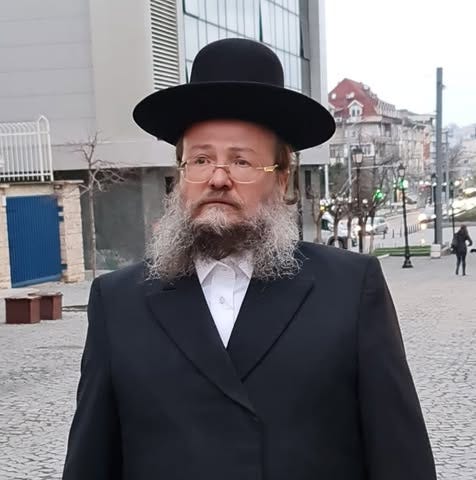
Searches turned up multiple phone calls and text messages between the defendants and the Rabbi including pictures of the weapons and discussion about them. Rabbi Pinhas Zaltzman has professed innocence and is currently in Israel. Prosecutors have not commented on whether or not he is being investigated.
Rabbi Pinhas Zaltzman titles himself the “Chief Rabbi of the Republic of Moldova” and is a prominent figure in Moldova’s Orthodox Jewish Community based at the historic “Hay” synagogue. However, there is no official “Chief Rabbi of the Republic of Moldova” and the title is self-styled. The “Jewish Community of the Republic of Moldova5” released statements noting that the title of “Chief Rabbi” is self appointed and that he has “never been appointed, elected or confirmed in any religious leadership position within the Jewish Community of the Republic of Moldova by its statutory bodies.”
Other Security and Defense News
Here’s a roundup of the other security, defense and hybrid war news”
Romania shoots down 3 Russian drones in 48 hours. For the first time since the full scale invasion of Ukraine, the Romanian air force has downed 3 Russian drones that entered its airspace - one in Buzău and 2 in the Danube Delta region. Romania expelled one Russian diplomat in protest against the incursions. President Sandu condemned the violation of Romanian airspace and stated that
“Romania’s security is the security of the Republic of Moldova. We stand with Romania.”
Moldova has delayed the imposition of VAT and excise taxes on Transnistria until September 1. The taxes, which were supposed to come into force on August 1, are being delayed due to the change in government. Transnistria’s “Foreign Minister” Vitaly Ignatiev recently refused to travel to Chisinau for a meeting in the 1+1 format on the tax changes stating that the issue is “not on the negotiating agenda.” Ignatiev has continuously refused to travel to Moldova for fear of arrest under a law on separatism - a fear which the Moldovan authorities call unfounded.
Three Shor parties to be dissolved by court decision. The "Renaissance,” “Chance” and “Alternative and Salvation Force of Moldova” parties were found to be successors to the unconstitutional Shor Party and have been dissolved. The Moldova Mare (Greater Moldova) party was suspended for 12 months. These rules mark wins for the Ministry of Justice, which petitioned for their dissolution based on referrals from the Central Election Commission (CEC).
“Evrazia” declared an extremist organization. The decision comes from Moldova’s Court of Appeals and attaches criminal liability to Moldovan citizens - at home or abroad - which fund Evrazia or participate in their programs. The request for this designation came from Moldova’s Security and Intelligence Service (SIS) in July 2025.
International Affairs
Here’s a roundup of the top international affairs stories of the week:
Indian President Droupadi Murmu visited Chisinau. This marked the first visit from the head of state of the Republic of India since Moldovan independence. In meetings with President Sandu they discussed economic cooperation, deeper cooperation in higher education6 and investments. She also participated in the first Moldova-India Business Forum which was organized by Invest Moldova.
The United States drops all tariffs against Moldova (for now). On July 24th the Trump Administration imposed a sweeping new tariff regime on imports from more than 80 countries including the European Union. This new regime replaced the global 10 percent duty that had expired at midnight which itself replaced the “Liberation Day” tariffs that were struck down by the Supreme Court. This newest iteration utilizes the Trade Act of 1974 and is designed to combat countries that engage in “forced labor.” This join a patchwork of other tariffs, including some levied under a revived Smoot–Hawley authority7 as part of the ever changing trade policy of the United States. Moldova was not included in the recent announcements which targeted major trading partners and largely skipped smaller countries (for the time being). This means that the US tariff on Moldovan goods has gone from 31% (announced, not implemented), to 25% to 10% to 15% to 0% in the last year and a half.
In a bewildering statement he states that he agreed with the IMF “ that the project would be discussed with the business environment, professional associations and civil society” and that these consultations would be the basis for creating amendments. But his government did not do that. He seems to be confusing asking the IMF for permission to do something and actually doing it.
I believe it is the absolute shortest for real ministerial tenures, but that there may be cases where acting ministers served for less time.
SLAPP = Strategic lawsuits against public participation
It implied that he borrowed money from one of the other partners. This opens more questions. If Bob and Steve found a company that Steve invests $50,000 in and then loans Bob $50,000 to invest in the company, and if Bob is an MP who does not work for the company, what value is Bob bringing to the project exactly? and why is Steve effectively giving Bob 50% of a company? etc.
The AO Jewish Community of the Republic of Moldova is an NGO with that name. It is itself a self-proclaimed body but one with a long history. At the same time, there is no one groups, Rabbi or other organization that speaks for all of Moldova’s Jewish community.
Around 1400 Indian students study in Moldovan universities - mostly in medicine.
If you know, you know.
"The investigation outlines how Tubca entered parliament 5 years ago with modest earnings and property and is today on the verge of becoming a euro millionaire."
Was your usage of the euro here for the benefit of your international readership, or is it common practice in Moldova to denominate large sums of money/value in euros?