

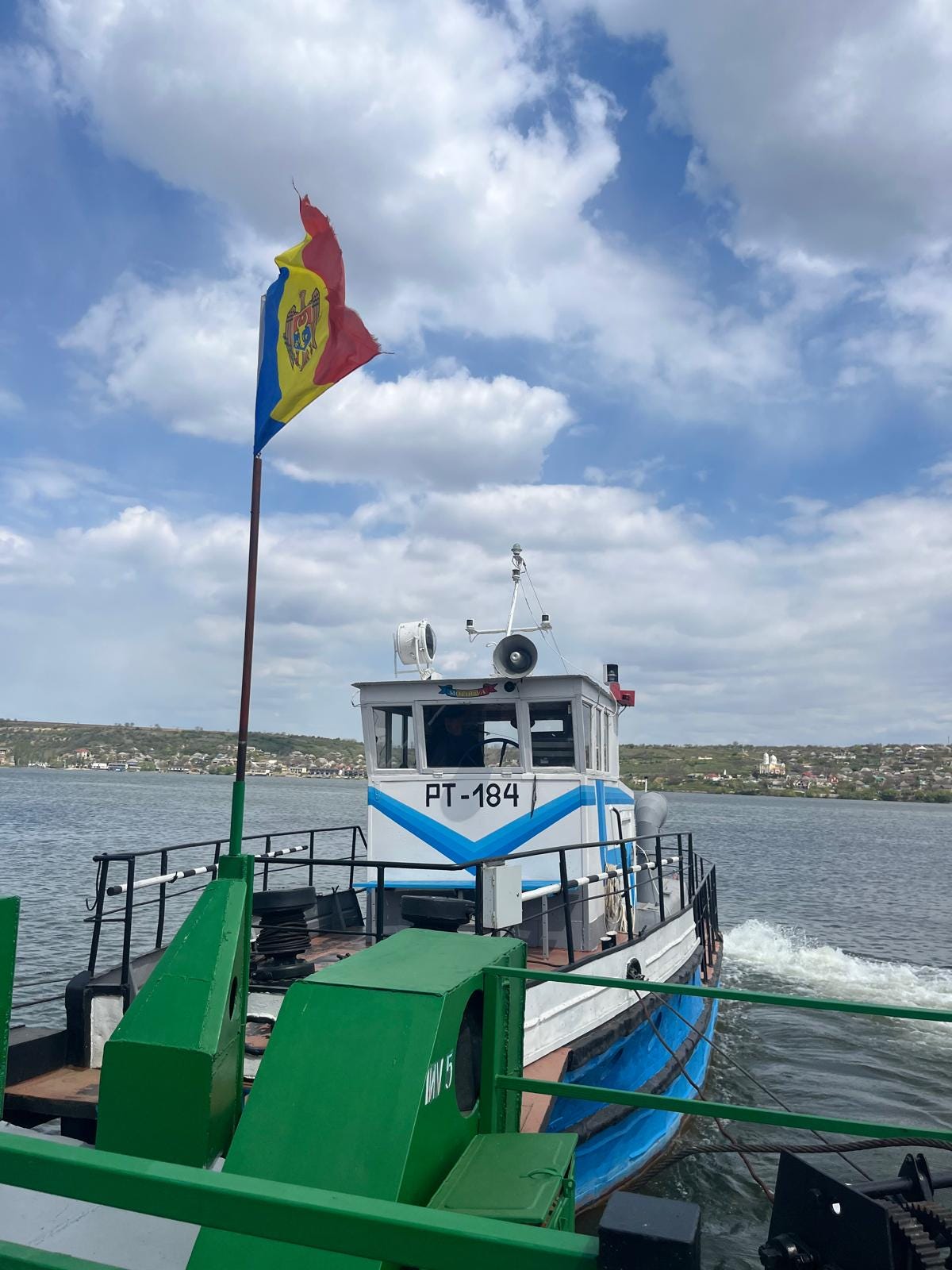
There are not many places in landlocked countries that require a ferry service, but for the residents of the small town of Molovata Nouă in Moldova, the ferry acts as a lifeline.
Molovata Nouă located on the Eastern bank of the River Dniestr1 in Moldova. Unlike most areas on that side of the river, Molovata Nouă pledges it’s allegiance to the internationally recognized Moldovan government in Chișinău, rather than the Russian-backed separatist government of the Pridnestrovian Moldavian Republic (often called ‘Transnistria’).
Molovata Nouă, and a handful of smaller villages around it, defended themselves successfully against the separatist forces in the Transnistria War of 1992, and the town has remained in an unusual position ever since.
The ferry service has run since 2000, negating the need for vehicles and passengers to pass through the separatist controlled checkpoints and customs posts located on the bridges across the river by the city of Dubăsari ten kilometres south. Neither Transnistria nor Moldova control the traffic between Dubăsari and Molovata Nouă, as neither recognizes this as a border (Transnistria claims the whole Eastern bank, including Molovata Nouă and Moldova claims the whole of Transnistria).
At the jetty, a noticeboard from the local government of the district emphasizes how vital the link has been:
“historically and practically, the ferry is more than a transport link, in winter and in difficult conditions it helps ensure remote villages are supplied with food basic goods.”
The ferry journey from Molovata to Molovata Nouă takes around ten minutes and the crossing is free of charge for all passengers and vehicles. The service runs roughly every two hours from 7am to 8pm. The ferry is so popular that cars and lorries frequently have to wait for the next crossing in busier times. At the Molovata side, there is an “internal customs post” staffed by Moldovan officers, to control goods that may have come from separatist Transnistria. On the Molovata Nouă side, there are a handful of Russian and Moldovan soldiers and an old Russian APC guarding the off-ramp to the ferry as part of the joint security zone procedures which control the area around the River Dniester.
Molovata Nouă and the surrounding villages have been in a precarious situation for 35 years, but this situation may change soon. The Moldovan Government has recently exerted a lot of pressure on Transnistria, including banning Russian officers from entering Moldova, essentially trapping them in Transnistria. This follows several crises in the region, including Russia no longer providing free natural gas since 2025, previously a large part of the Transnistrian economy was making electricity with this gas and selling it to Moldova. Furthermore, with the Ukraine – Transnistria border closed since the outbreak of war, all traffic in and out of the separatist region is required to travel through Moldova, a factor being leveraged by Moldova as it plans to integrate Transnistrian businesses into the Moldovan economy and tax system.
These measures have led to some speculation that Transnistria’s de facto independence may be coming to an end. In March, a leaked document exposed the first plan for re-integration formulated by Moldova since 2003. Whilst the European Union has stated that Transnistria’s continued existence would not impede on Moldova joining the EU – indeed, Cyprus, a long standing EU member already has a similar breakaway territory within its borders - a plan to dissolve the region and re-integrate it entirely would make Moldova’s path to European integration simpler.
However, until re-integration is completed and the last Russian troops leave Moldova, Molovata Nouă and the surrounding villages will continue to rely on the ferry across the Dniester.
Hamish Fraser is a journalism postgraduate at Robert Gordon University in Aberdeen, Scotland. He is a guest contributor to Moldova Matters.
“Nistru” in Romanian

Very interesting, thanks!