

Rail travel in Moldova has been on the decline since the fall of the Soviet Union, but Calea Ferată din Moldova (the Moldovan state railway company) is planning to make significant improvements for passenger connectivity, to try and convince Moldovans to take the train.
On Tuesday the 14th of April, CFM tested the suitability of Revaca station as an interchange for the airport. The test involved extending the terminus of the Ukrzaliznytsia (Ukrainian Railways) train from Kyiv to Chișinău to Revaca, ten kilometers south of Chișinău and transferring 45 Ukrainian passengers from there to the airport by bus. The direct train from Kyiv was relaunched after a hiatus of more than twenty years in 2022 to allow for Ukrainians to reach Chișinău Airport easily. Passenger traffic at the airport has nearly doubled since the war in Ukraine started, and a large proportion of passengers on the Ukrzaliznytsia service travel to Chișinău in order to fly further afield.
The test was proudly published by CFM on its website and Facebook page, with the company planning to make preparations for Revaca to become the permanent terminus of the Kyiv to Chișinău train. CFM say that they have achieved a travel time of just 15 minutes between Chișinău central station and the airport, utilizing the bus connection at Revaca. In a press release, they stated “this integrated solution aims to reduce the time it takes to avoidance of urban congestion and increased comfort for passengers.”
As well as Revaca becoming the terminus for the Kyiv train, CFM also hope to restart a regular suburban service on the Chișinău - Revaca - Sîngera route later this year, with Revaca set to be renamed as ‘Revaca-Airport’ to highlight its status as an interchange for the airport.
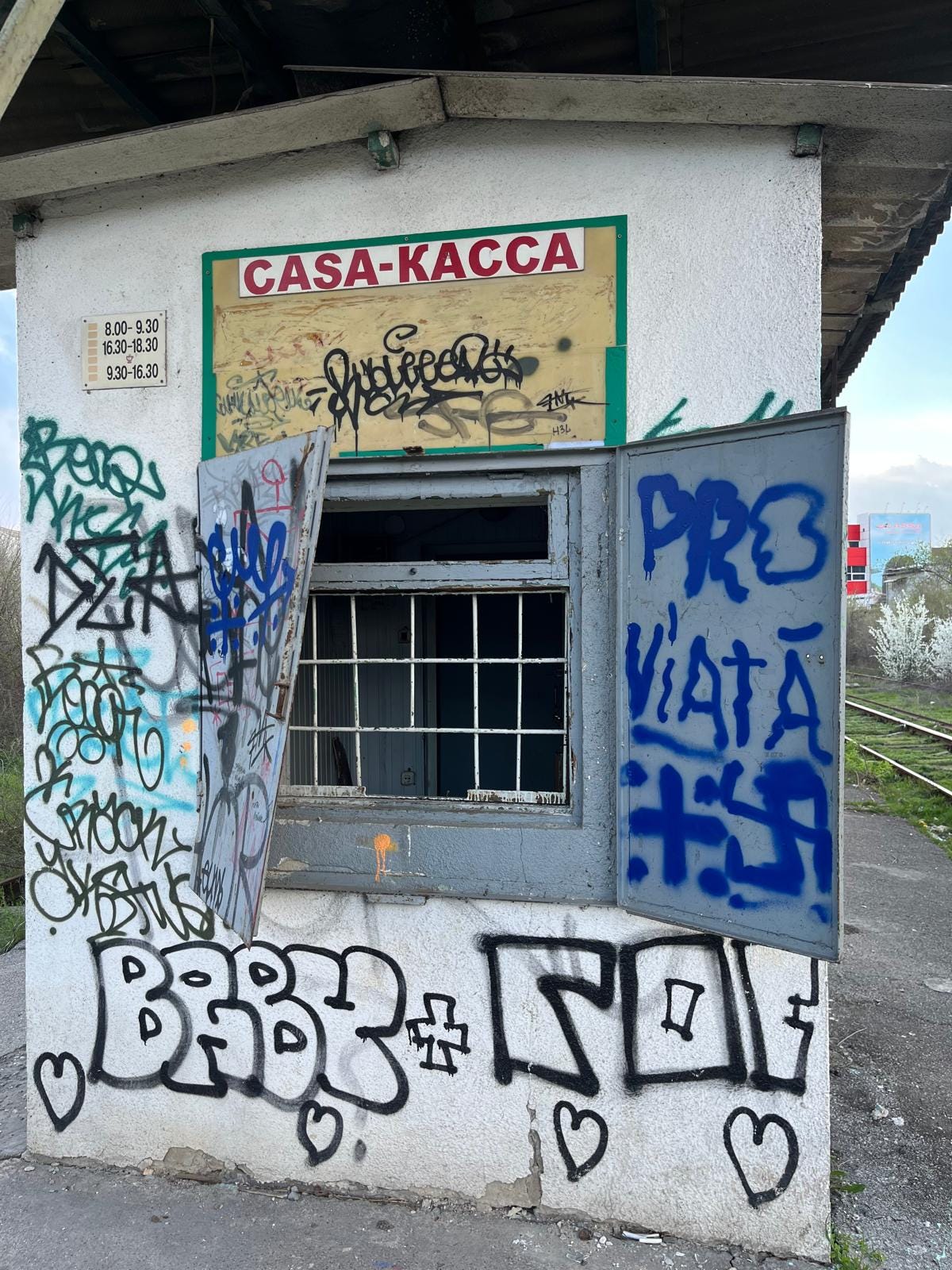
The test train on the 14th of April was the first passenger train to call at Revaca since January 2025, when the Chișinău to Bender-3 suburban service was cancelled due to the ‘difficult financial situation’ faced by CFM, which was so severe that the organization delayed paying salaries to employees in 2024 and 2025. Since then, the railway line to Revaca underwent rehabilitation and reconstruction which was completed successfully in November last year. The station at Revaca itself, however, requires significant improvements before regular service can restart, with plans to invest €8.5 million into modernizing the route.
Longer Term Future for CFM: Aligning Moldovan Railways with Europe
The rehabilitation of Revaca station is one of a number of improvements that CFM are making to the network. Despite having just one domestic train service operating now (a return from Ungheni to Chișinău) the organisation is exploring the possibility of purchasing low cost passenger vehicles, called “railbuses”, to operate on regional routes throughout the country including the planned airport shuttle service. If these trains enter service, they will be the first new passenger carriages in use in Moldova since the Soviet era.
European Union funding allocated to CFM has already brought about the rehabilitation of several sections of railway line, particularly those which are vital for goods transport between Ukraine and the European Union. In the future, this funding will be used to rebuild and electrify the mainline from Chișinău to the Romanian Border at Ungheni. The line will be changed from Russian gauge (1524mm) to the standard track gauge (1435mm) used across most of Europe. This will eliminate the need for train carriages to be raised at Ungheni before crossing into Romania, shortening journey times significantly. In order to minimize the impact on existing services, the new track will likely be placed alongside the old Russian-gauge track to allow for service to continue whilst the upgrades take place.
It is planned that this work will also incorporate the section of line to Revaca-Airport, allowing for a 140-160km/h rail service on the route Revaca-Airport - Chișinău - Ungheni - Iași - Bucharest.
Whether Revaca becomes a meaningful improvement or simply a temporary workaround will depend on whether these larger modernization plans materialize - something that remains uncertain given CFM’s ongoing financial challenges.
Hamish Fraser is a journalism postgraduate at Robert Gordon University in Aberdeen, Scotland. He is a guest contributor to Moldova Matters.
