

On September 12 the New York Times Opinion published a guest photo essay about Moldova titled “Great Powers Are Moving Apart. What Happens if You’re Caught in the Middle?” This headline was later changed and to “The Tiny Country Caught in the Battle for Europe’s Future.” It’s by Frankie Mills, a British journalist based in Tbilisi.
The headlines themselves tell a story. In the first, Moldova is caught in the middle of a great power struggle, in the second, in a battle for Europe’s future. In neither, is there any implication that Moldova has any agency, nor that the country might be interested in choosing its own future. A lack of agency is very much a theme of this article.
This article made me furious when I read it and multiple friends wrote to me with similar thoughts. I’ve decide to share my own opinion here in the Perspective section of the newsletter because I think this piece highlights a specific type of sloppy journalism that can do real reputational damage to a small country like Moldova.
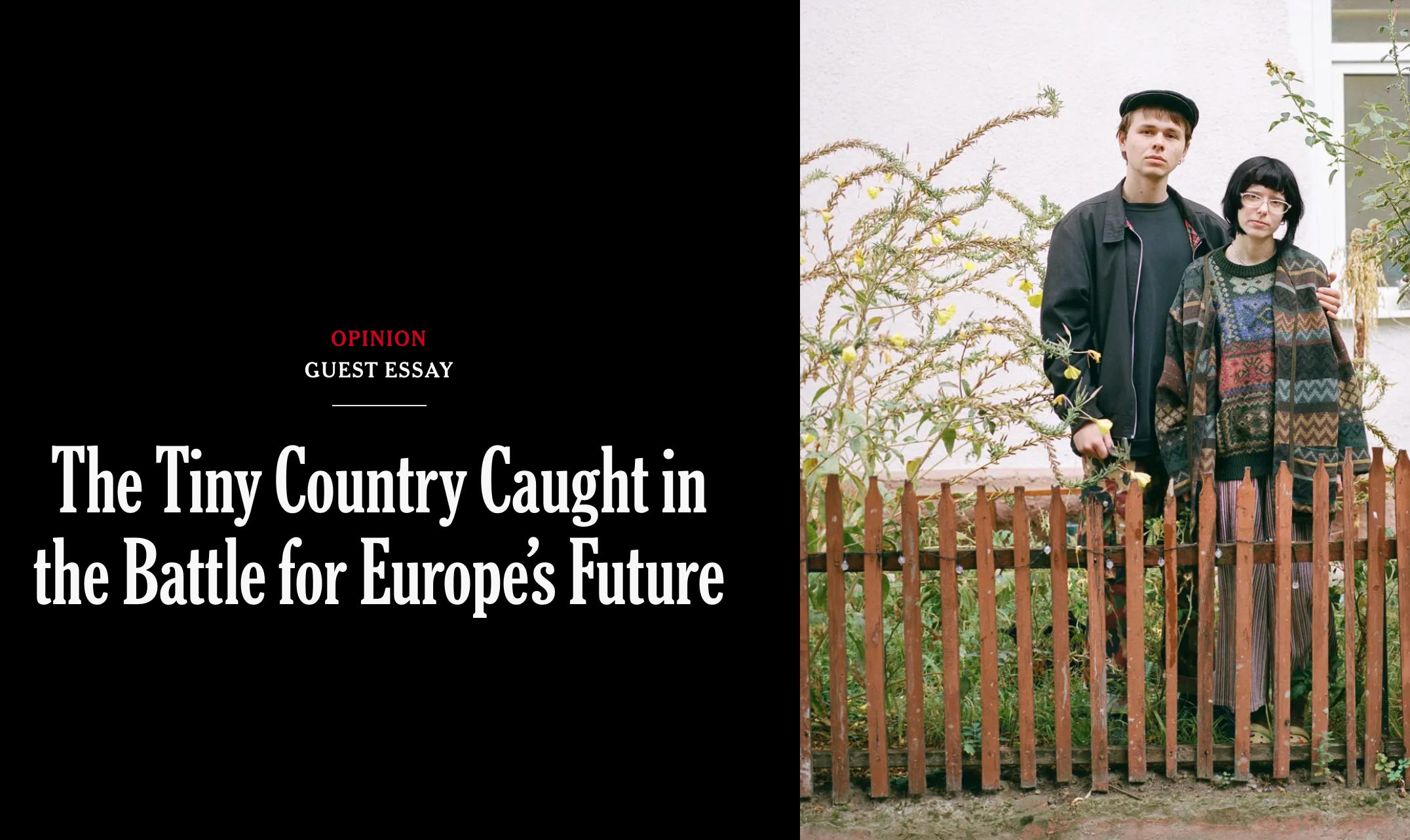
The article opens with the line “One gray morning last fall I visited Andrei Morari and Ecaterina Samonii at their home in Chisinau, Moldova’s unassuming capital.” Right away we get the core idea both visually and in text - everything is “gray.”
Mills opens with a discussion over tea with Andrei and Ecaterina about the 2025 Parliamentary Elections that had just taken place 2 days before. They express frustration with the choice between PAS and the Patriotic Bloc and the geopolitical choice between Moscow and Brussels. Ecaterina tells her “There should be a middle for Moldova, just to be Moldova.” In addition to the grayness, this indecision and rejection of the East-West dynamic is a running theme of the article. About their home, Mills writes:
“Their home was scattered with keepsakes, including a small statue of Lenin that Andrei had brought back from Moscow, where he’d lived for a time as a history student.”
I’ll come back to statues of Lenin later, but if you read this article knowing nothing else about Moldova you would assume that they are *everywhere.*
Andrei Morari and Ecaterina Samonii
Mills opens and closes her essay with this couple and their frustrations about Moldova’s East-West dilemma. They are pictured above alongside the article title. That photo does quite a lot to set the tone of the article - rural, old fashioned clothes, Soviet vibes, etc. When Andrei leaves for work and Mills continues to chat with Ecaterina over tea you get the impression that Andrei is off to work in a tractor factory or something. The “gray” is easily transferred to their lives in the minds of a reader.
That does quite a disservice to the subjects. Ecaterina is a fashion designer who had debuted a new collection 2 months before this interview. Andrei studied TV and film directing and is a passionate photographer. Given this information, we can see that photo above as someone choosing a Soviet Chic style, not someone going off to work in a tractor factory. Very much modern hipsters and not people frozen in time.
I’m able to find out so much about Andrei and Ecaterina because they were 2 of the 4 protagonists of a DW Documentary released in September 2025 called “Moldova’s young people at a crossroads - Between Russia and the EU.” In it Andrei is shown to be pretty cynical (if well informed) about politics. He is from Transnistria but cannot go home because he refused military service, he worries about the cost of living and is considering emigrating to Europe.
This documentary, which explores the same themes as this photo essay, highlights the problematic choices that Mills is making in 2 ways. Firstly, Andrei has very specific reasons to be disillusioned. He has to literally sneak through fields to see his family in Transnistria and discusses not knowing his identity - certainly not Moldova, not really Transnistrian, mostly he considers himself Russian. His concerns are real, but not representative.
Secondly, that documentary focuses on 3 sets of protagonists with different approaches to the challenges in their lives. One is an activist - relentlessly trying to make Moldova live up to her values and expectations. Another is a simple guy with a passion for music - he is a DJ and is trying to introduce his village to a new sound while looking for options to continue living in his home country.
Mills chose to focus on the couple that was deeply disillusioned and planning to emigrate. She also chose not to give us pretty important context about everything from how they dress to what specific (and understandable) experiences formed their worldview.
Note: To be clear, this isn’t Andrei and Ecaterina’s fault and I am not suggesting that they are misquoted. They welcomed strangers into their home to discuss how they see the world. I am suggesting that Mills made a specific editorial choice in centering this couple’s experience and making the reader believe it is representative of Moldova - while leaving out critical details about their lives.
Wait, Where is Russia?
One of the most startling aspects of this article is what is missing: any discussion of Russia’s hybrid attacks on Moldova or the role the Kremlin plays in this story. The article treats both Russia and Europe as destinations and Moldova as standing (confused) at a fork in the road. She writes about how the “ambiguous” referendum on EU integration suggests a “complex picture,” implying that the country is evenly split. She does this without noting the fact that Russia bribed more than 100,000 voters and spent over $100 million dollars interfering in the 2024 referendum.
Mills interviews a man named Dmitri Ianul in Gagauzia who she identifies as a “teacher and former journalist.” He tells her how the explosions at the Ukrainian port of Reni near his village wake him and his wife up at night. Dmitri is pro-EU but explains that his neighbors are very pro-Russian and they refuse to believe that drones crashing outside of their town are Russian, suggesting that “they were decoys launched by pro-European politicians to justify a national pivot away from Russia.” He tells her that his neighbors plan to leave for Russia if Moldova joins the EU because:
“They worried the bloc would use Moldova as a dumping ground for Europe’s waste and transform the country with L.G.B.T.Q. propaganda and that people would no longer have the right to farm their own land.”
But Mills never asks the question - why? Why might people believe such things? Why might they reject their own experience of drones crashing nearby for narratives about false flags?
Russian influence, information warfare, hybrid attacks - the article never touches on these topics.
Spectators vs Actors
In this telling, Dmitri Ianul is telling a sad and confusing story. His neighbors are unable to see what is right in front of them and this “teacher and former journalist” can only relate how mixed up the world is. We are again given a picture of disillusionment.
But Frankie Mills missed something else that is really important - when his neighbors talk about pro-EU politicians, they are talking about Dmitri Ianul. He is not simply a “teacher and former journalist,” he is an elected politician - a detail this article leaves out entirely.
He is the President of the Cișmichioi Local Council and a prominent pro-EU figure in Gagauzia who actively works to attract EU funding and support to his region and town. Dmitri Ianul is not a spectator, he is an actor. Someone who is fighting to make change in a part of the country subject to the highest bombardment of Russian propaganda. Someone who is trying to rebuild local infrastructure and convince his neighbors about a brighter future that is possible.
Rather than discuss this, or explore why he is such a supporter of the EU in an area with so many pro-Russian voters (and how he keeps getting elected), we move on to a reflection on how everywhere Mills traveled in Moldova, “it was apparent that Russia’s invasion of Ukraine didn’t necessarily make joining the European Union more appealing.”
It is genuinely hard to tell whether Mills was trying to actively downplay pro-European sentiment, or if the whole article is just so pessimistic that she naturally highlights the downsides.
A Country With a “Soviet past”
The article describes Moldova as “Wedged between Romania and Ukraine, with a population of around 2.4 million people and a Soviet past.1” In her telling, Mills leans into that Soviet past hard. She talks about Andrei having a Lenin statue in his house, and then features photos of a giant bust of Lenin and another one of Stalin. Both busts are photographed at the Soviet Open Air Museum and both have dilapidated abandoned buildings in their background. Like all the other photos, the sky is overcast and everything is gray.
Side Note: Frankie Mills spent a month in Moldova taking photos for this piece and we know at least part of it was in September 2025. That month was unbelievably sunny and beautiful. Just sayin’
Readers without much context will think that Moldova is swimming in statues of Soviet dictators. That could not be further from the truth. Most Lenin statues were long gone when I got here back in 2012. They moved to statue parks or museums or just to the trash. Gagauzia and Transnistria are exceptions, which is why tourists go there for pictures.
I remember in 2013 when a friend of mine in the Peace Corps told me how the Lenin statue in Donduseni was decapitated during the night. The mayor didn’t know what to do with that, and while he hadn’t wanted to remove the statue he certainly didn’t want to pay to have it fixed either. Whether by policy, or vigilante action, Lenin was gone from most of the country long before the war began in 20142.
This is just the most visible of a more subtle decision that you can see across these photos - there is absolutely nothing modern about Moldova. Not buildings, not cars, not people. Frankie Mills chooses to give us a photo of 2 young people who want the country to join the EU. Here is who she selected:
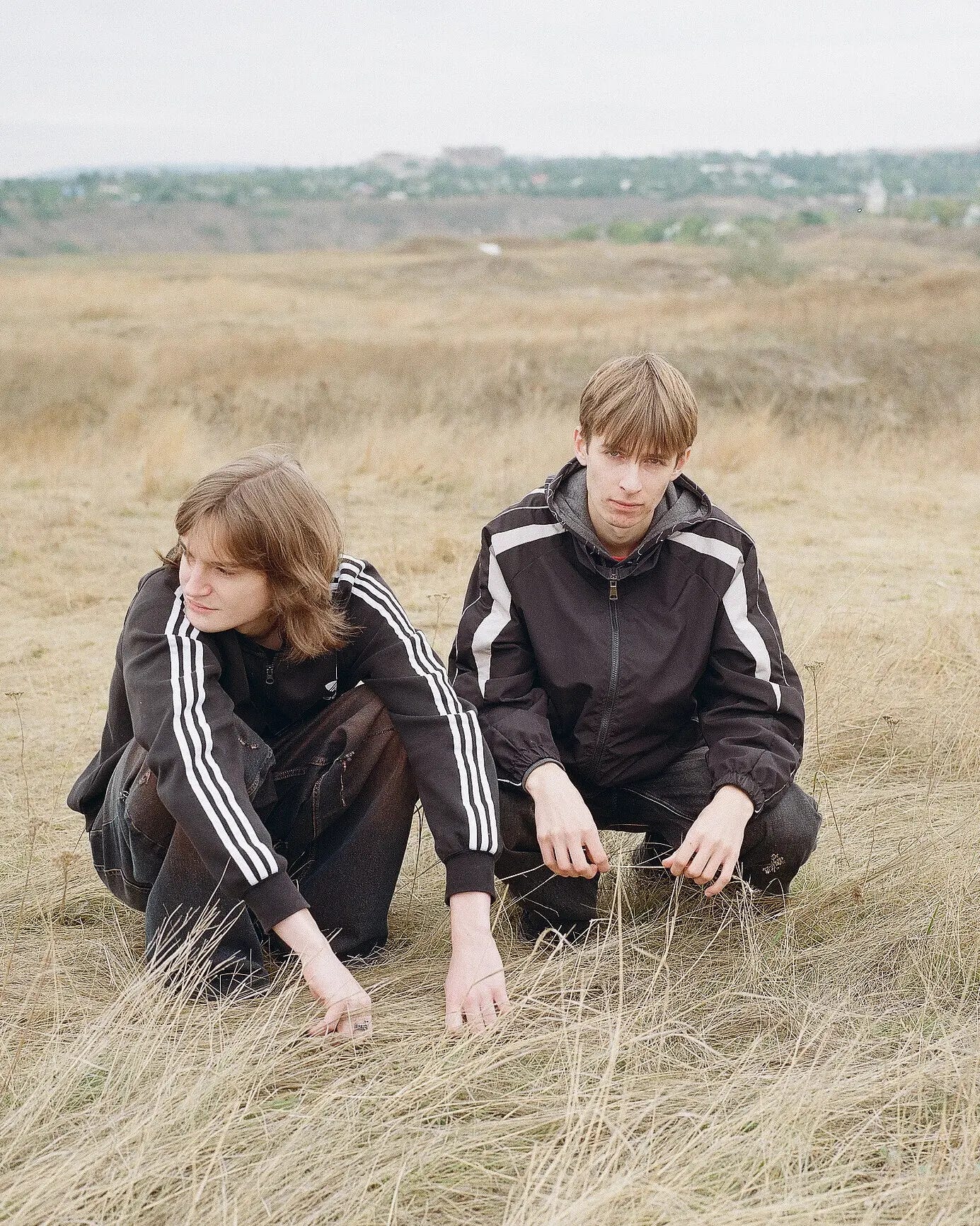
With all respect to Stefan and Dumitru and their sartorial choices, this is not a representative look in Moldova post 1999. Finding 2 kids who chose to dress like a 90’s gopnik was a choice Mills made. If you went down the road in Chisinau looking for a pro-EU voter you would have to talk to hundreds, maybe thousands of people before finding this outfit.
Working Backwards
The article is part of a series for the Times call “The New World Disorder” which purports to be a “series exploring the disintegration of the postwar international system and how countries are adjusting as America steps aside.”
Now, readers can feel free to disagree with me, but I didn’t see anything like that in this article. How countries are adjusting implies agency and decision making. This article spent much more time talking to elderly teachers sadly putting pins in maps to indicate where their students emigrated to.
On her website, Frankie Mills states that she tells “stories about displacement” and that she is “interested in exile; especially how people create a sense of belonging and meaning when in limbo.” That tracks well with this story. She focuses on Ecaterina and Andrei because they speak a lot about displacement. Recounting her conversation with Ecaterina, Mills writes:
“We talked about the complications of navigating everyday life in a country with two widely spoken languages, Romanian and Russian, and the isolation felt by those who speak just one.”
It’s worth noting here that “those who speak just one” refers almost exclusively to Russian speakers who chose not to learn Romanian. Meanwhile, all Romanian speakers also know Russian3 - a minority language that is not the national language.
This is a very human portrayal of Ecaterina and her sense of dislocation. That is a personal story - but it is not Moldova’s story.
I think that is my main frustration with this essay. Nothing in this story is outright false - the NYTimes fact checkers did their jobs - but it is absolutely not sharing useful information with readers about Moldova in 2026. It shares a narrow set of stories, often without important context, and paints an exceptionally bleak picture against a backdrop of gray skies and statues of Soviet dictators.
It’s like a photo essay of a small town in Appalachia focused on poverty and the opioid crisis - except that 99% of the readers have literally no other images in their mind of America. In such a case, you aren’t painting a picture of that town, you are telling the world about a country, and you are doing a disservice to the readers if you don’t know that.
Geopolitically, this article fundamentally mistakes the choice that it sets out to explore. We are given the impression of Moldovans standing at a fork in the road leading to 2 different destinations - Moscow and Brussels. But Moscow is not a destination - Moscow is actively trying to come here4. Russia is spending hundreds of millions of dollars trying to capture Moldovan politics while spending billions of dollars and hundreds of thousands of lives trying to conquer Ukraine. Should they succeed at that, only a fool believes they would stop at the Dniester river.
Finally, the overwhelming “gray.” The picture being painted here is bleak and I have to believe that is intentional. Again and again this essay introduces characters and places that are gray and one dimensional. It lets the reader fill in the blanks and see the “post-Soviet” hellhole that their stereotypes will easily plug into this content. But Ecaterina is a fashion designer with some really cool work to show off. This country is full of color and energy. People here talk about the future and every year things improve - better roads, better restaurants, better parks and places to spend time with family and friends. Sometimes the government makes things better, as often, improvements come in spite of their efforts. Moldova is complicated but fundamentally focused on the future.
To conclude, here are some pictures I took in September 2025. I’m providing them to prove that in Moldova the sun does shine from time to time. I live in a village and I did not find people despairing about the future, nor were there statues of Lenin or Stalin anywhere to be seen. People made wine and went fishing. In Chisinau people went to trendy cafes and walked along modern streets and through beautiful parks.
Most importantly, the sun shone brightly.
I’m not saying that there aren’t gray days and people who are pessimistic. I am saying that this article did a terrible job of painting a picture of a whole nation.


Emphasis mine.
At that point most holdouts were removed and Lenin vanished wholesale from Ukraine.
“All” sounds definitive and I am tempted to reduce it to 99% or something, but I have lived here for 14 years and never met a Romanian speaker who did not know Russian. The youngest cohort knows far less, but they still know it.
Meanwhile, Europe is arguing about common agriculture policy while keeping the door firmly locked. The forked path metaphor really doesn’t work.
This immediately made me think of how foreign journalists and travel bloggers write about the Transnistrian region. They often call it “Europe’s last Soviet state” and present it as an exotic country frozen in time.
But it is not a state. It is part of the Republic of Moldova, controlled by a Russian-backed separatist regime. When that context is left out, the coverage does more than romanticise Soviet symbols. It repeats the separatist narrative and gives the region a legitimacy it does not have.
Great piece, David.
I think one of the issues is that this lady specialises in stories on a specific subject. She says on her About page on her website https://frankiemills.co.uk/9/ that she specialises in stories about displacement. The issue is then for the New York Times to pick this up as a general story about Moldova or for you to see it this way. When I look at her Instagram and her website, I have to say that it is not just Moldova that looks grey.