

Tax Reforms Stalls Against Increasing Backlash
Last week I wrote 2 articles on the Ministry of Finance’s proposal to overhaul the tax system. If you didn’t catch them, you can find those articles here:


Since writing those article, Minister of Finance Andrian Gavrilită has been in a fighting retreat as pressure has built and parts of the proposed reform are abandoned one by one. On June 26 President Sandu called on the government to “take a break” regarding the tax reform saying:
"The tax reform must be done, but I think the Government should not rush. It must take a break, analyze the comments very well."
She called on the government to incorporate feedback and carefully analyze some of the most controversial elements such as VAT increases.
On June 28 opposition parties gathered a protest in front of parliament organized by PPDA MP Vasile Costiuc. Around 200 people attended, including senior members of multiple opposition parties including MAN, Our Party, PSDE and PPDA. Criticism came from many angles but mostly focused on the proposal to increase VAT on energy.
At the same time, government spokesperson Daniela Crudu announced that the reform is no longer moving forward saying:
“We have heard the various opinions and listened to the people. We have already announced that we are taking a break to rethink fiscal policy and the other proposed measures. In the coming period, we will review the proposals and continue extensive consultations, to identify a fair and sustainable formula for citizens and the economic environment,”
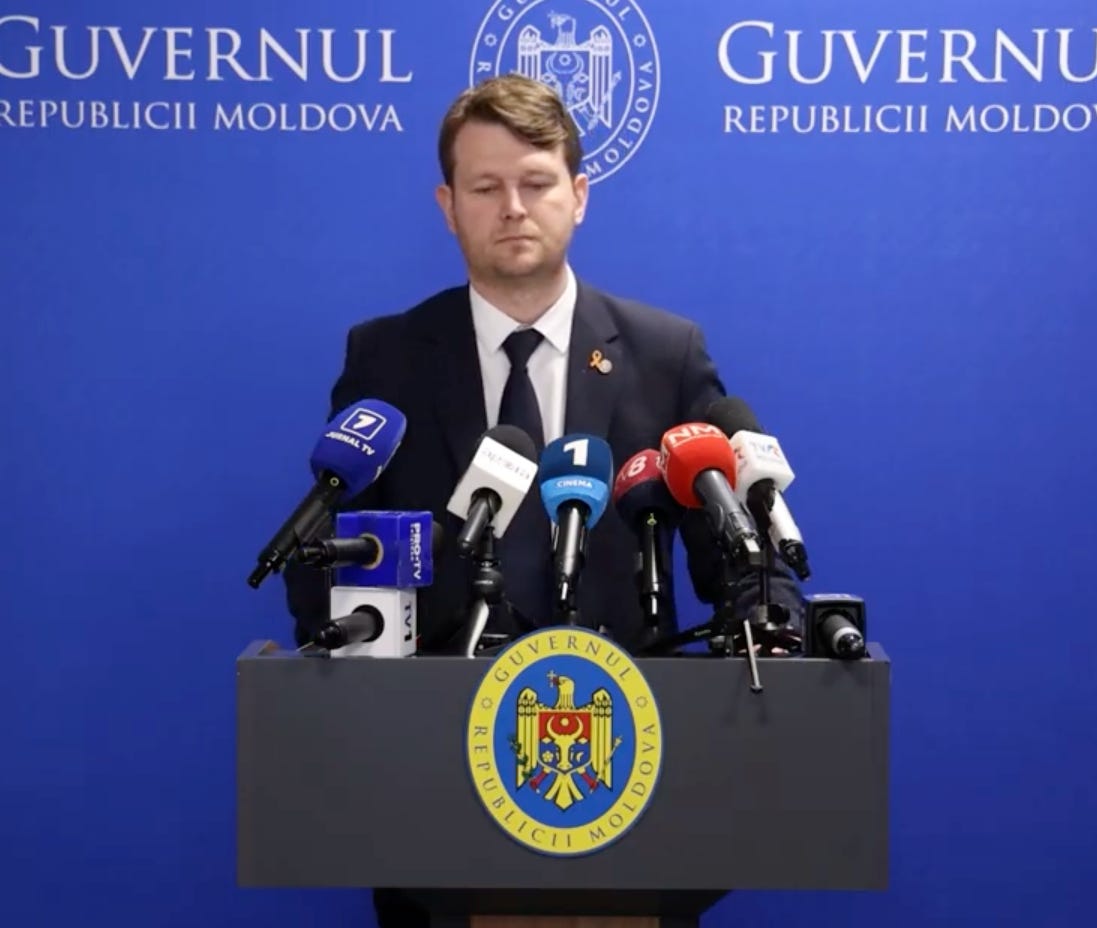
In an interview with ZdG defending the reform, Minister Gavrilită continued to stress that prices would not go up for “ordinary people” and explained that they are backtracking on aspects of the bill - either canceling provisions or extending the implementation timeline. In the interview he was asked how it was that the Minister of Health, who has stated that “This reform will destroy the healthcare system,” was not consulted prior to the bill being released to the public. The Minister replied that it was not consulted with the other ministries beforehand because there was no time.
Asked about the rush, Minister Gavrilită stated that he wanted to start consultations in March but they were delayed until the completion of a visit from the IMF. He stated that because of this delay, “only at the end of May did we agree on the principles and direction of reducing the budget deficit in a few years, so that we would have medium-term economic stability.” Asked if the reforms themselves were driven by the IMF he stated:
“The reform itself is not imposed, but the need to reduce the budget deficit and stabilize the state’s financial degeneration is a condition [of the IMF]”
Later, in another interview Minister Gavrilită stated that wage increases for public sector workers planned for September may need to be delayed without the tax law. He said that it was an IMF condition that new revenue would need to be found before raising salaries.
So, we now know that at least some aspects of the rushed nature of the reform was caused by the IMF. We also know that this huge reform was rolled out without serious consultation with other ministries1. This type of coordination would normally be managed by the Prime Minister - but he has still not made any substantive statements on this topic.
Where does the reform stand?
As of today, here is what we know about the planned changes. In the interest of keeping the main text tight, I’ll add some quick analysis in footnotes.
Plans to tax wedding and birthday gifts will not be implemented2.
No capital gains tax will be applied to the sale of primary residences. All other changes to capital gains tax and VAT for new housing will be delayed until 2028.
HoReCa VAT will still go from 8% to 20% in October. VAT on food and agricultural products remains unclear and the ministry says that they are still considering what to do3.
VAT for electricity, heating and natural gas will still go up in April 2027 after the heating season4.
0% tax on reinvested profits for large companies will be delayed (no date).
No VAT hike on medicines
Changes in salary taxes and structure will be delayed until 2028
This is still a moving target - the reform as it was proposed is falling apart in just about every direction.
MoldATSA Updates
The MoldATSA scandal continues to develop since I sent the latest update yesterday. Here is the latest:
Anastasia Taburceanu’s work for the State Chancellory was funded by the EU. This was confirmed by the EU Delegation who stated that she was contracted under a project called “Reform Support Team” implemented by the European Bank for Reconstruction and Development (EBRD). The EU Delegation confirmed that she was contracted to “provided communication support to the State Chancellery and the Prime Minister’s Office” and that she resigned in June 2026. They stated that “The EBRD is evaluating the implementation of this contract. The Commission awaits the results of this evaluation to decide whether additional measures are necessary.” The confirmation came after the leader of the Moldovan National Party (PNM) Dragoș Galbur publicly alleged that Taburceanu was being paid €4,000 a month by the EU for her work at the State Chancellery. This would be in addition to her salary from MoldATSA. Galbur also alleges that she lives in Slovenia. Neither the sum nor details about where Anastasia Taburceanu lives have been independently confirmed.
The Director of the Public Property Agency (APP), Roman Cojuhari, has resigned. He accepted that “The Public Property Agency is the institution responsible for monitoring the activity of Moldatsa” and stated that he was resigning due to the failures at the agency in this case and “to protect the image of the institution and the team.”
The National Anti-Corruption Center (CNA) have opened a criminal investigation and are conducting searches at MoldATSA today. The case is opened under articles related to abuse of power and abuse of office.
PAS party leaders have started to make public statements about the scandal and especially about the resignation of Radu Marian. Minister of Education and Vice-President of the PAS Party, Dan Perciun, called the situation at MoldATSA “systemic error, a failure to react on time and to adequately investigate the incoming signals.” He stated that “People’s anger is understandable and perfectly justified” and that “There is a need for a course correction both in the party and in the administration of the state.” Additionally, he and others have praise Radu Marian’s personal integrity and his decision to step down and take responsibility for a mistake.
That last part may seem like a positive spin on a politically disastrous situation, but it has some merit. Journalist Mariana Rata of TV8 wrote a post marking just how new and important it is that this investigation is having serious impact. She wrote:
“Four resignations!!! I can’t remember a single time in the history of the Republic of Moldova when a media investigation has led to four resignations.
I’ve written hundreds of investigative reports over my career, from 2007 to 2026, under every government during that period, but I’ve never seen this many resignations follow a press scandal. And that makes me happy.
It means we are living in a different kind of state now—a state where those in power are beginning to understand that they must answer to the people when they are caught doing something wrong. Because in a democratic state, power belongs to the citizens. You cannot lie to them, and you should not risk disappointing them.”
(…)
🚿 This summer has brought a cold shower for the government. I hope it turns out to be a cleansing and revitalizing one. We want to be in the EU by 2030!”
She went on to call for the next resignation to be that of Constantine Batin from Expo Business Chisinau. Batin was the subject of TV8’s recent investigation who bluntly rejected the idea that just because someone was under sanctions as a Russian arms trafficker he (Batin) should not do business with them.
Disinformation and (Dis)Union
Last week Moldova’s internet lit up with a new story - Romania’s lower house “tacitly adopted” a bill on the unification with Moldova. The story on social media was that Romania unilaterally approved union, and Moldova’s pro-Kremlin politicians quickly made statements:
Igor Dodon called it a sign of Romanian imperialism:
“it is regrettable that politicians in Romania have launched such an imperialist policy, which risks quarreling both countries. And it is shameful that politicians in the leadership of Moldova are silent or tacitly approve Romanian territorial expansionism”
Mayor Ion Ceban chose to blame PAS (insinuating they are behind the effort):
“We condemn any attempt to attack the values enshrined in the Constitution of our country. (…) We do not sell our country and condemn any statement by politicians in the context of the destruction of the country. The people are the only ones who decide. PAS’s actions are increasingly obvious. Their goal is to do everything, through the actions they take, to reach a situation in which Moldova is a failed state.”
Russian Foriegn Ministry Spokesperson Maria Zakharova:
"It's no secret that Bucharest is hatching plans to take over Moldova. This isn't news to us; we talk about it constantly. Now this situation has taken a turn for the worse,"
She went on to talk about how scandalous it was that no referendum was planned, etc.
To unpack this, we need to clarify 2 key points:
1) What is “tacit adoption” of a bill?
Under the Romanian constitution multiple entities have legislative initiative - including parliament, the government and even citizens (via a petition with enough signatures). They can all propose legislation which then goes to parliament which is split into an upper and lower house - called the Senate and Chamber of Deputies respectively. Each bill starts in one chamber, which considers the bill before passing it to the other chamber for a decision. Who is the first considerer and who is a decision maker depends on the topic. This setup leaves open the possibility of a “pocket veto” - aka one chamber simply choosing to ignore a bill and therefore killing it. To prevent this, and to encourage speed, any bill not voted up or down in 45 days is considered “tacitly adopted” by the first chamber and moved to the one that makes the decision.
The bill in question wasn’t remotely serious and was put in the stack of unserious proposals5. From there it was never debated or voted on and was therefore tacitly adopted by the lower house after 45 days. It then goes to the Senate who has no obligation to pick it up and therefore it will die there in a drawer somewhere.
2) Where did this bill come from?
This bill was proposed by the SOS Romania party which is led by Member of the European Parliament (MEP) Diana Șoșoacă. This is her last month:
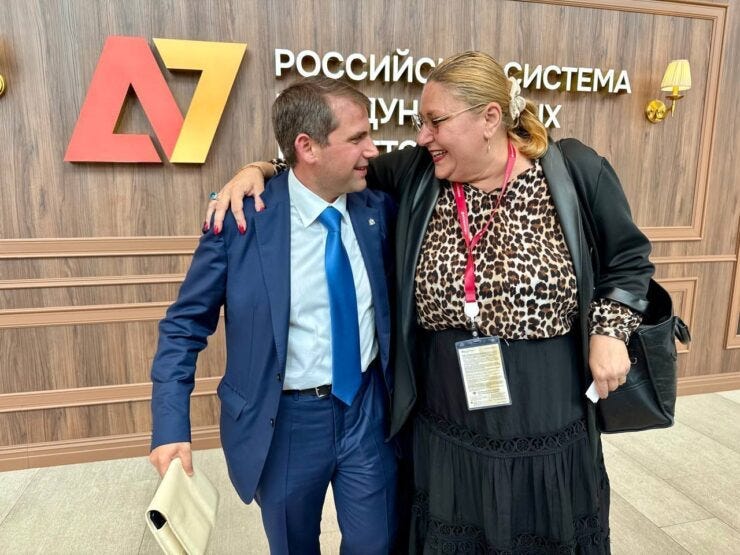
This is therefore a great example of an information warfare campaign. The Kremlin asked its proxy party in Romania to introduce nonsense legislation. They did, and now the Kremlin has spun up a HUGE messaging campaign attacking the legislation they produced and trying to pin it on PAS and the Romanian government6.
President Sandu reacted to questions about the bill saying:
“This is a document proposed by a Moscow agent, whose goal is to discredit the idea of unification, and nothing more. It would be as if I came to parliament tomorrow with a legislative initiative to annex France to Moldova. Please, government, implement it. Unification isn’t happening that way, we all understand that perfectly well,”
Other Shor & Hybrid War Updates
Here are the other top stories in hybrid warfare and security news of the week:
Moldova detained a Russian FSB officer. The alleged spy entered the country without diplomatic credentials, allegedly to visit monasteries and other touristic sites. In reality he was heading to Transnistria to collect information in the Security Zone according to the Security and Intelligence Service SIS. He is currently being held under 30 days preventative detention.
President Sandu stripped Belarusian spy Alexandru Balan of his Moldovan citizenship. Recall, Balan was part of the April prisoner exchange with Belarus and Russia. RFE/RL also released a story this week alleging that Balan knew the names and identities of at least 7 Romanian undercover agents that he passed to Belarus. They also detailed the tradecraft he used to communicate with his handlers and how he was eventually uncovered.
Flyone airline must be sold to new owners. That was the decision of the Council for the Examination of Investments of Importance for State Security (CEIISS) last week, who ruled that the airline needed to change owners in the next 90 days. The decision noted the proximity of the beneficial owners to sanctioned individuals. The airline is owned by Vladimir Cebotari who has been identified by SIS as a close associate of Vladimir Plahotniuc.
EU Accession Updates
We have a new section at Moldova Matters! For some time I’ve mostly put EU accession stories in the bucket of “international affairs.” That no longer fits neatly as the opening of negotiating clusters starts literally intertwining European and Moldovan law. So we’re going to try out a new section here and see how well it makes sense. Here’s an roundup of the top EU Accession stories of the last week:
Hungary has put the breaks on opening new negotiating clusters. Prime Minister Péter Magyar has signaled publicly and privately that he opposes any fast track accession process for Ukraine, saying that it sends the wrong message to the Western Balkans7. The EU still hopes to open 2 more clusters this summer - Cluster 6: “external relations” and Cluster 2: “internal market.” Others could gradually reopen after. Romanian President Nicușor Dan explained what happened behind closed doors saying:
“Obviously, we would have liked this phrase [“accelerated process”] to remain, with regard to Moldova, but there were two conditions. There was a condition from Hungary, which said: “I don’t want this phrase for Ukraine” and a condition from many other states that said that “the language of Ukraine and the language of Moldova must remain the same”. And as a logical consequence, the language disappeared from both. It is a diplomatic moment, there are no practical consequences”
The second Moldova-European Union Summit was held on June 22. The high level dialogue came with some announcements. The EU is preparing a €120 million euro package for the security sector in Moldova. An additional €11 million will be provided to strengthen Moldova against hybrid attacks and €17 million on border security initiatives. Additionally discussions on collaborating to build a med-tech cluster and other joint research initiatives have been initiated. European Commission President Ursula von der Leyen stated that Moldova was 93% of the way through its commitments under the growth plan and if it finishes the remaining 7% could unlock an additional €503 million under this mechanism.


EU is drawing up “gradual integration” plans. This was reported by Politico following both France and Germany circulating “membership lite” proposals and a general rejection of the “reverse enlargement” plan promoted by Commissioner for Enlargement Marta Kos. The plan would reportedly grant EU membership benefits step by step as countries hit certain benchmarks. The article noted how something similar was already going on with Moldova’s integration into the EU mobile roaming space, cultural support programs and Single Euro Payments Area (SEPA). Ukraine and Montenegro have both indicated opposition to this piecemeal approach.
PM Munteanu Fires the Control Unit
On June 24 Prime Minister Munteanu announced that he would be firing the 2 members of the Control Unit - an unofficial advisory body to the Prime Minister that tracks the delivery and implementation of government decisions and the tasks given to the ministries. Both members, Vasile Bolduratu and Angela Rojcov-Ciofu, had been appointed under Prime Minister Recean in 2023. Announcing the decision he stated:
"The standards of professionalism, institutional loyalty and integrity must be higher than anywhere else. Following the assessments and information analyzed in the recent period, I have come to the conclusion that the activity and composition of the Control Unit no longer benefit from the necessary trust to exercise this function. I announce to you that the members of the Control Unit resigned from their positions this morning. Public functions are not a privilege, they imply responsibility, and when the necessary trust to exercise a function is lost, the right decision is to make changes. And that is what we will do",
No clarifications were made as to what “assessments” of “information” preceded this move and this was not in response to any public reporting about either person8.
Following the announcement, ZdG analyzed their asset and income declarations and found that each advisor earned a salary of around 44,000 lei / month. However, they each served on a number of boards of state enterprises where they got additional renumeration. Specifically:
Vasile Bolduratu - board member of the Thermoelectric Company (central heat and power company), National Lottery, State Enterprise "Radiocomunicații” (broadcasting infrastructure), Cartuș (defense manufacturer), Chisinau Glass Factory and the Costești Hydroelectric Company
Rojcov-Ciofu - board member of the Chisinau International Airport, Moldova Post, Cricova Winery, and MoldExpo center
Vasile Bolduratu was earning around 500,000 additional lei per year from his board places while Rojcov-Ciofu was earning around 300,000.
No more information has been made available as to why the firings happened now, but the timing is important. The Prime Minister made this announcement just as the government was starting to grapple with the MoldATSA scandal - which itself has highlighted the serious problems with how state owned companies’ boards are comprised.
Keep Cool Out There!
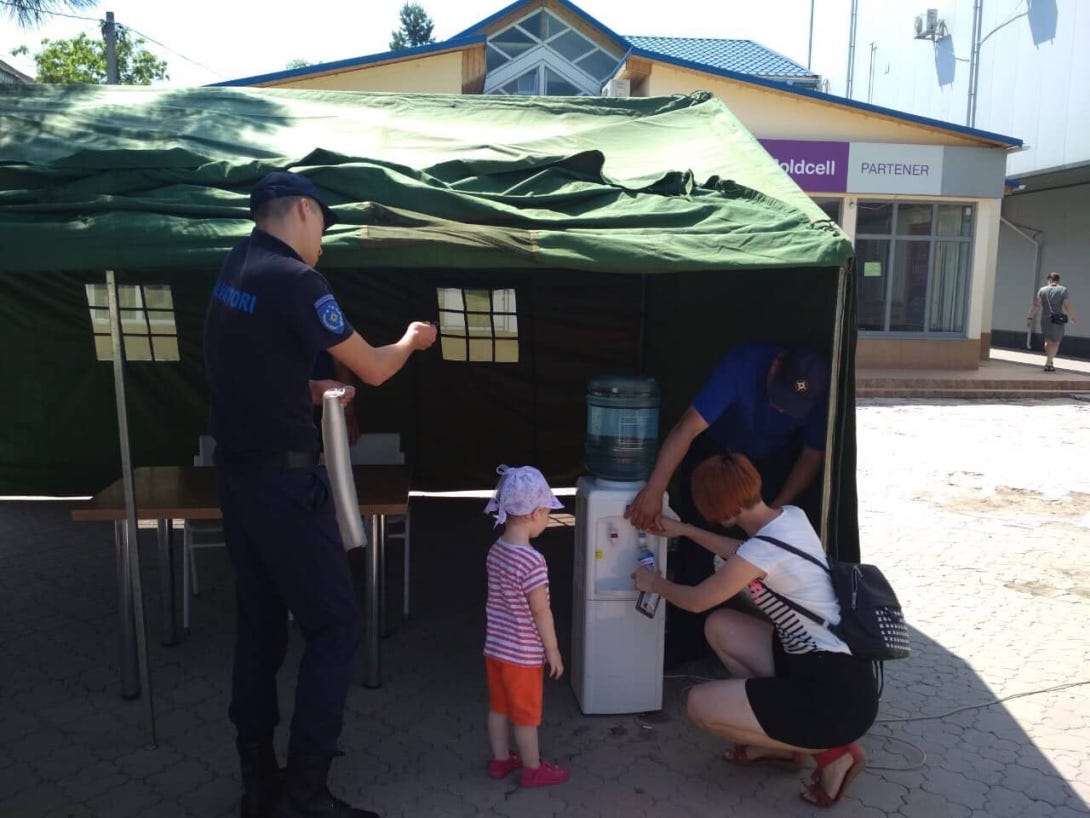
Moldova is facing the first heat wave of the year. From Jue 30 - July 1 the North of the country is under Code Orange (temperature highs of 36-38 C) while the Center and South of the country is in Code Red (39-41 C). The General Inspectorate for Emergency Situations (IGSU) has begun installing rehydration tents in multiple districts as a resource for those who overheat while walking in the city. The National Road Administration has also issued reminders that under Yellow, Orange or Red codes trucks over 12 tons are banned from driving on roads between 10 am and 8 pm9.
The Power Lines Have Names Now
… and they’re making progress!
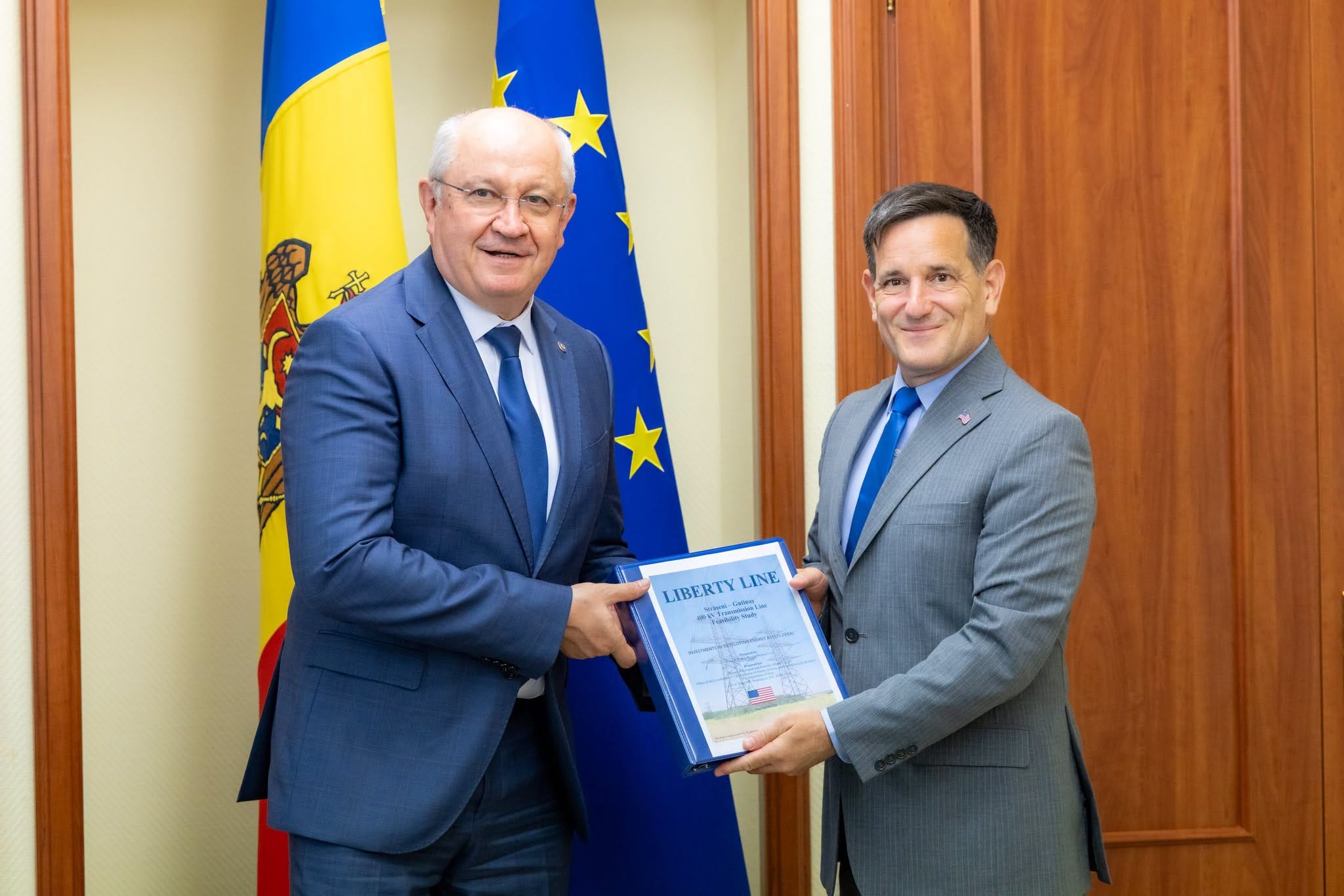
On June 18 Chargé d’Affaires of the US Embassy Nick Pietrowicz presented Prime Minister Munteanu with the completed feasibility study for the Strășeni–Gutinaș 400 kV high voltage line. This line, which will be fully financed with support of the United States, is now called the “Liberty Line.”
On June 26 Moldelectrica signed a contract with the Turkish company SA-RA which won a tender to construct 45 km of the new 400 kV Balți–Suceava power line. When announcing this, Minister of Energy Dorin Junghietu announced the names for all 3 lines as follows:
Vulcănești–Chișinău “Energy Independence Line” (scheduled completion December 2025, expected Summer 2026)
Strașeni–Gutinaș “Liberty Line” (feasibility study done, completion planned around 2030)
Balți–Suceava “Resilience Line” (construction planned over the next 24 months)
So we now have Independence, Liberty and Resilience connections, building and planned, connecting Moldova to Romania and the European energy grid.
That’s a positive note to end on after the craziness of the last week.
Which is insane.
To clarify - this was never about taxing gifts. The Minister has said time and again that a large threshold would be set. The problem he is trying to solve here is the fact that many politicians (from the parties that you would guess) have no income but declare €30-70 thousand euros in gifts each year spread out over their birthday, 8 March, baptisms, etc. This is a common way for oligarch or the Kremlin to launder money to their cutouts (who do not have real jobs). Politically the idea of taxing gifts did not go over well. Also, it would not solve the problem. Fake gifts is a law enforcement problem and raising the Kremlin’s payroll by ~15 - 35% does not solve the issue. This is a classic case of a total failure to analyze the political economy of the reform.
Once again - a failure of political economy. Raising taxes on farmers is always extremely difficult. I assume they will back off this and leave their VAT rate at 8%. This is a disaster for restaurants who will see their effective VAT rate on food go up 4x (not 8% - 20%) because they will absorb the differential.
I suspect this might be the next to drop out.
In the US Congress this would include the constant drumbeat of bills to withdraw from the UN, abolish the Federal Reserve, abolish the IRS, create lunatic holidays, etc.
Not that Romania has a government right now or could pass any bills even if it wanted to.
Not that he’s supporting speeding up accession for Albania or others in the Western Balkans either.
I was today years old when I found out there is something called a “Control Unit”
At these temperatures asphalt softens and heavy trucks will sink into it leaving ruts and waves on the road. When temperatures cool these permanently harden.