

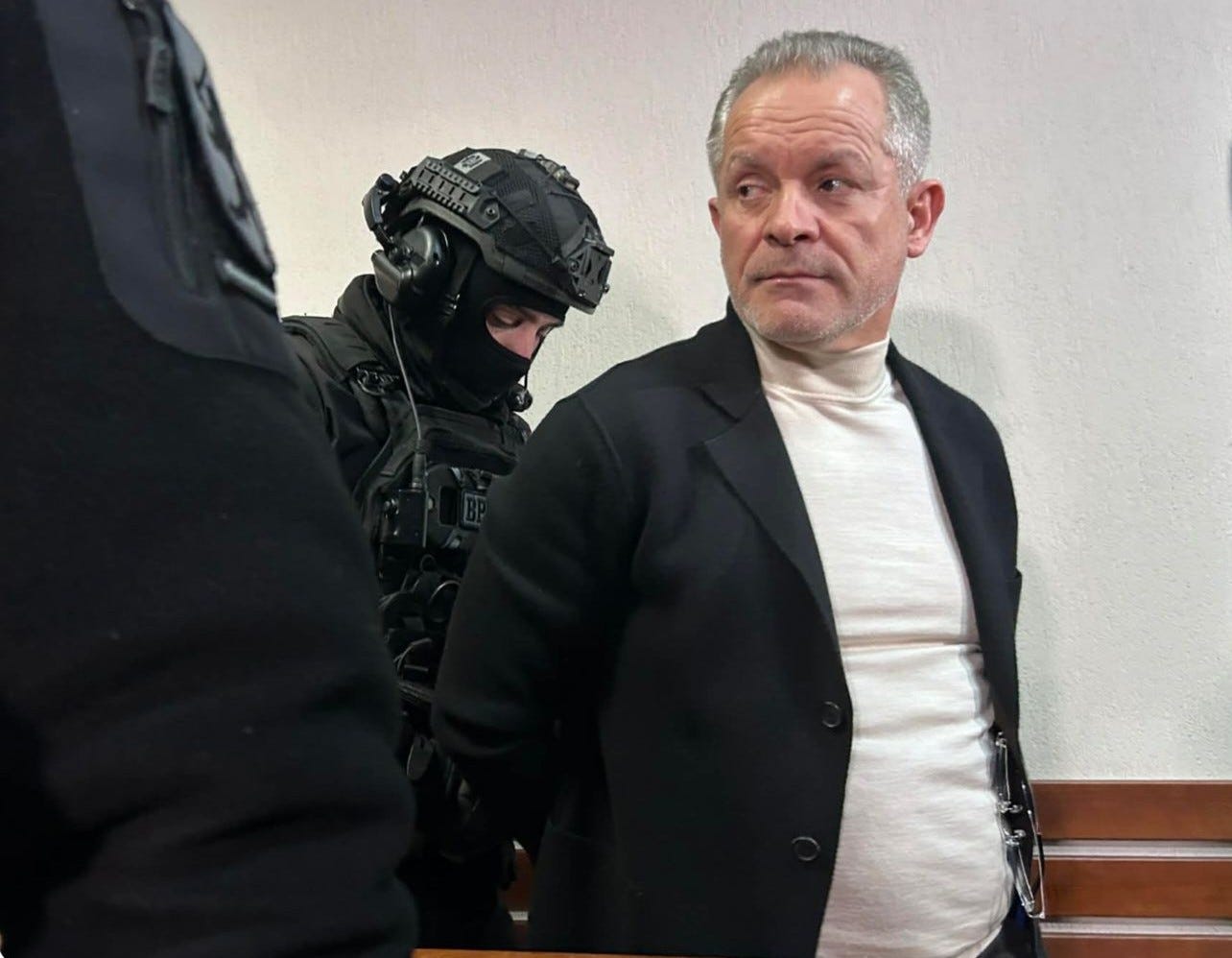
On April 22 the court found Vladimir Plahotniuc guilty on all counts in the “Bank Fraud” case and sentenced the oligarch to 19 years in prison. In addition, the court accepted the Ministry of Finance’s civil case in full and ordered Plahotniuc to repay the state more than $60 million dollars in damages to be collected from seized assets.
After the conviction in absentia of Ilan Shor, this is the second conviction related to the Theft of the Billion.
The decision was 672 pages long and detailed the complex network of money flows, shell companies, foreign bank accounts, private planes and other assets derived from the theft. At the core, the court found the scheme to work as follows:
Ilan Shor took fraudulent loans from 3 banks through companies that he directly or indirectly controlled. This was between June 2013 and February 2014.
These funds were converted into foreign currency and transferred to various companies outside Moldova based on fictitious purchase contracts for alcohol, furniture, perfume, construction materials and more.
The funds were then laundered through a web of shell companies in many jurisdictions. The ultimate beneficial owner of many of these companies was Vladimir Plahotniuc.
Plahotniuc was the creator and leader of this largest bank fraud in Moldovan history and the ultimate beneficiary of many of the funds.
The court concluded:
“this sentence will not create feelings of injustice, but will serve as a guarantee that the rights and freedoms enshrined in the Constitution of the Republic of Moldova and in other state laws are protected, and that their violation is countered and sanctioned. For the reasons set out above, expressed both in favor of and against the defendant Vladimir Plahotniuc, as well as taking into account the identified aggravating circumstance, the panel of judges will opt to impose a sentence on the defendant in the form of imprisonment,”
Breaking Down the Sentence
The sentence broke down as follows:
13 years for the creation and management of a criminal organization
12 years for bank fraud in the years 2013-2014
12 years for bank fraud in the years 2014-2015
8 years for money laundering 2013-2014
8 years for money laundering 2014-2015
Once applying rules around concurrent sentencing as well as time served this netted out to 19 years.
Plahotniuc refused to attend his sentencing.
Appeals
Plahotniuc’s lawyers immediately indicated that they will appeal the ruling and attacked the credibility of both the court and evidence in public statements. Prosecutors stated that they will review the ruling and consider whether they will appeal as well. Prosecutors had requested a sentence of 25 years in prison in total.
We’ll take a deeper dive into the appeals process and what might come next below.
Further Cases
Prosecutors have noted that additional cases against Plahotniuc are ongoing and some will soon be in court. Specifically, cases against him for falsifying passports and identity documents while a fugitive are being built in collaboration with the jurisdictions involved in these false documents. Other complex cases in grand corruption continue to be investigated.
What it All Means
The conviction and sentencing of Plahotniuc is a milestone, not only for Moldova’s justice system but for the country’s democratic system as a whole. There are very few cases of any country holding a former authoritarian leader criminally accountable in a judicial process. Dictators often escape accountability entirely, or fall in violent revolutions without due process. Moldova has held the man who fully captured the state - as well as the justice system itself - legally accountable a mere 7 years after he fell from power.
Let’s take a look at what comes next in terms of appeals, what this means for Moldova’s justice reform and what is says about the standing of the man whose name people once feared to say aloud.